Holidays and Depression: When Severe Symptoms Need More Than Coping
- Severe depression is a medical illness associated with changes in brain function, significant functional impairment and an elevated risk of suicide. It does not resolve when the holiday season ends.
- The holidays can intensify severe depression by disrupting sleep, treatment schedules and access to care.
- Using alcohol, cannabis or other substances to manage depressive symptoms is associated with worse outcomes and can delay an accurate diagnosis.
- Depression that has not responded to two or more antidepressants is considered treatment-resistant, and interventional treatments developed for these people are available now.

Much of what is written about mental health during the holidays focuses on seasonal stress, family tension and the importance of rest. That guidance may help someone experiencing a temporary low mood, but it does not reflect the reality of people living with severe depression, for whom the season often brings a worsening of an illness that was already present and, in many cases, already resistant to treatment.
For those people and for those closest to them it’s important to understand how severe depression is diagnosed, why the holidays can intensify an existing episode, how self-medication can complicate the illness, how to recognize when depression has become dangerous and which treatments are available when medication alone has not been effective.
“Major depressive disorder is a disorder of brain circuitry, involving altered communication between prefrontal regions that support cognitive control and limbic regions involved in mood and threat processing,” said Dr. Brandon Bentzley, co-founder and co-CEO of Salma Health. “In its severe and treatment-resistant forms, it is associated with substantial functional impairment and an elevated risk of suicide. Disruptions to sleep, circadian rhythm and continuity of care during the holidays can destabilize an active episode. A person whose symptoms are worsening should be evaluated promptly rather than waiting for the new year.”
Holiday blues vs. severe depression: how to tell the difference
A lot of people experience the “holiday blues.” Factors like shorter days, heightened family drama or feeling like their holiday plans are inadequate compared to their ideals can combine to make this season less than joyful. For those grieving a death, the end of a relationship or estrangement from family, the season can bring those losses into sharper focus.
Although these feelings can be painful, they are different from major depressive disorder. Major depressive disorder is diagnosed when a person experiences at least five symptoms of depression during the same two-week period, including either a persistently depressed mood or a marked loss of interest or pleasure, and when those symptoms cause significant distress or impair their ability to function at work, at home or in relationships.[1] Other symptoms can include changes in sleep and appetite, fatigue, difficulty concentrating, feelings of worthlessness or excessive guilt and recurrent thoughts of death or suicide.
This distinguishes depression from the temporary sadness, fatigue or irritability many people feel during the holidays, which typically improves once the season passes. Severe depression often begins well before the holidays, continues long after them and can make it difficult or impossible to work, sleep, eat or care for oneself or others. In some people, depressive episodes recur at the same time each year, most often in the fall and winter, a presentation classified as major depression with a seasonal pattern.[1]
How the holidays affect existing depression
The holidays do not cause major depression, but they can trigger a return or a first occurrence of symptoms in people prone to depression. Regular sleep, daily exercise, consistent meals, predictable work schedules and standing appointments with clinicians all help keep symptoms from worsening. Travel, time off and changes in routine can disrupt that structure at once, interrupting sleep and medication timing when daylight is limited and many clinics are closed or operating on reduced schedules.
The social expectations of the season can also make depression harder to manage. Gatherings centered on celebration often require people with severe depression to conceal their symptoms for hours at a time, which is physically and emotionally exhausting. Anhedonia, the reduced ability to experience pleasure that is a core feature of major depression,[1] can become more apparent and more distressing in settings built around enjoyment. If depression prevents people from attending social or family functions they may feel guilt around the belief that they are letting people down.
Self-medication and substance use
Some people with severe depression turn to alcohol or other substances to manage their symptoms, and that might be more likely during the holidays when drinking is normalized. Alcohol may temporarily dull distress, but it can worsen depression over time, disrupt sleep and interact with antidepressants and other psychiatric medications.[2]
Self-medication is not limited to alcohol. Gallup’s 2026 poll found that 54% of U.S. adults drink alcohol, matching the record low first reached in 2025, while the use of other substances has grown. In 2022, for the first time, more Americans reported using cannabis daily or near daily than drinking alcohol daily or near daily.[3] A 2025 study in BMJ Mental Health found that people who began using cannabis to self-medicate reported more frequent use and higher levels of anxiety, depression and paranoia. Using cannabis, psychedelics or other drugs to manage symptoms can intensify depression, interfere with treatment and delay an accurate diagnosis.
Anyone who has been using a substance to cope should tell their clinician. That information is important to their care, and it helps them to recommend the safest treatment.
Recognizing when depression has become dangerous
Severe depression changes how a person sees their own life. Many describe it as seeing only darkness, with no color and no sense that anything will improve. The illness can lead a person to believe that their family and friends would be better off without them and that ending their life is the only option left. These beliefs feel true to the person experiencing them, but they are symptoms of depression, and they can be treated.
People in this state often do not reach out for help. They may withdraw from family and friends, stop returning calls or messages, talk about being a burden, give away belongings or seem unexpectedly calm after a long period of distress.[4] For that reason, the first call often needs to come from someone else.
If you are worried about a family member, friend or colleague, ask them directly whether they are thinking about suicide, stay with them and call or text 988 together. Research has found that asking about suicide does not increase suicidal thoughts. Counselors at the 988 Suicide & Crisis Lifeline also speak with people who are concerned about someone they love, so you can call for guidance on your own. Veterans can dial 988 and press 1.
Managing a severe episode during the holidays
For people with severe depression, coping strategies are not a substitute for treatment. Their purpose is to help a person get through a difficult period safely while continuing or beginning professional care.
Refill prescriptions before pharmacies and clinics reduce their hours, confirm whether your clinician will be available or who will provide coverage and continue taking medications as prescribed while traveling.
It can also help to tell one trusted person how severe your symptoms have become, so someone can notice if they worsen and decide in advance whom to contact and where to go if they do.
Reducing obligations during this period is an appropriate response to a serious illness, not a personal failing. Attending only part of an event, declining invitations or leaving early are reasonable ways to limit demands on your time and energy. If your symptoms are severe or worsening, do not wait until January to seek an evaluation.
When medication has not been enough
Many people with depression have already tried one or more antidepressants without adequate improvement. Depression that has not responded to at least two antidepressant trials of adequate dose and duration is generally considered treatment-resistant.[5]
The term describes how the illness has responded so far. It does not mean further treatment will not work, and it is often the point at which a second opinion and a comprehensive evaluation can identify what was previously missed, including co-occurring conditions or an inaccurate diagnosis. Medication management remains an important part of care for many people, and several treatments have been developed specifically for those who have not responded to medication alone.
- Transcranial magnetic stimulation. TMS is a noninvasive treatment that uses magnetic pulses to stimulate areas of the brain involved in mood regulation. For people with major depressive disorder who have not responded to two medications, TMS has a remission rate more than five times higher than continued medication. In a 2024 study published in the American Journal of Psychiatry, 1 in 2 people responded to TMS and 1 in 3 reached remission.
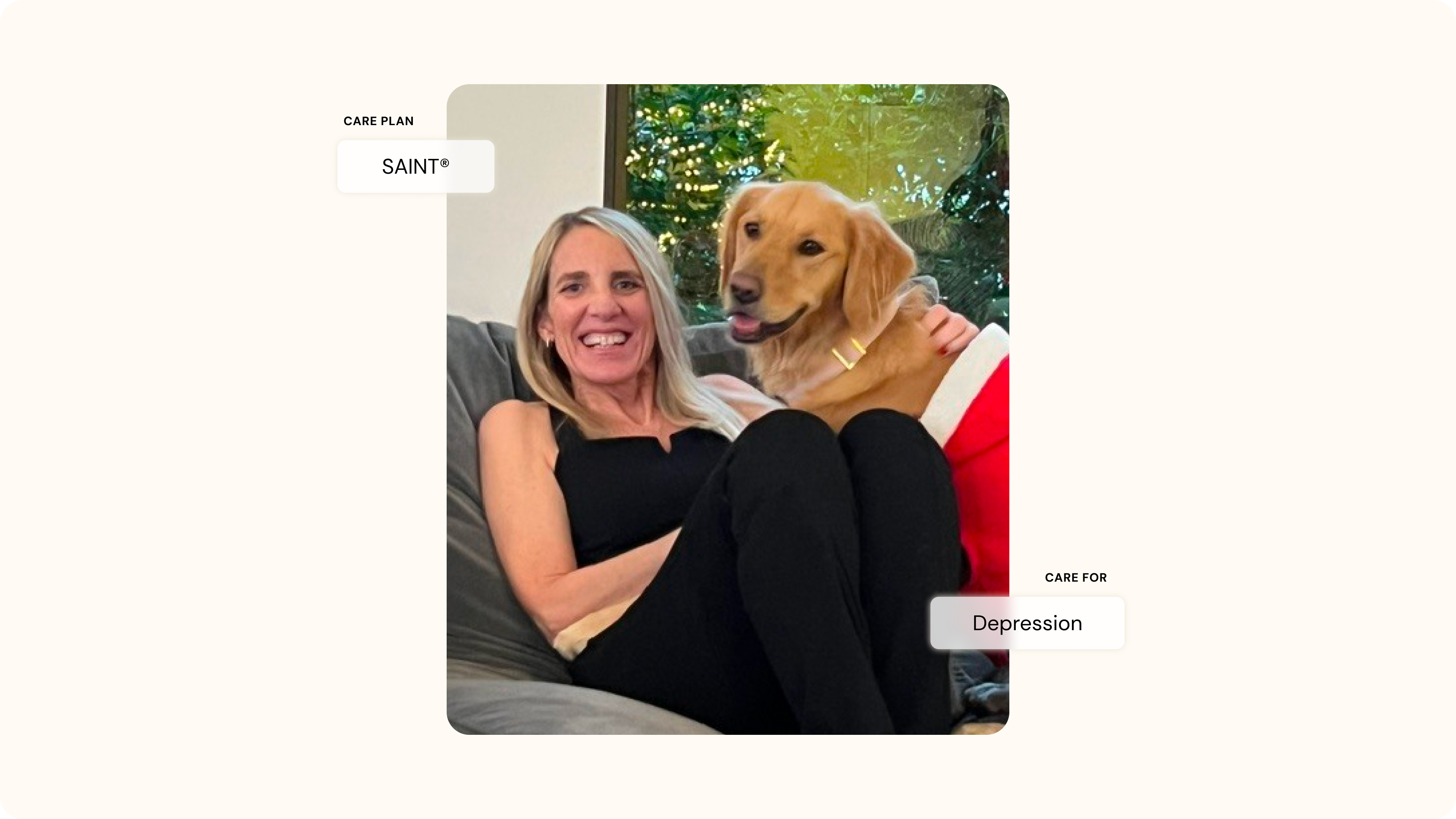
- SAINT®. SAINT is an accelerated, individualized form of TMS developed at Stanford University that uses functional MRI to identify a treatment target specific to each person. It is the only FDA-cleared treatment that produces remission in most people in five days or less, and it is more than three times more effective than conventional TMS.[6] Treatment consists of 10 sessions per day over five consecutive days. Valerie Zeko has shared her experience with SAINT after living with depression for many years.
- SPRAVATO®. Spravato (esketamine) is a nasal spray approved for adults with treatment-resistant depression and for adults with major depressive disorder who have acute suicidal thoughts or behavior. It is administered in a certified health care setting with monitoring after each dose. In clinical trials, 30% of people achieved remission after four weeks and up to 50% achieved remission during ongoing treatment.
- Intensive outpatient care. An intensive outpatient program provides structured, evidence-based therapy several times a week while people continue living at home. Salma Health’s fully virtual IOP meets Monday, Wednesday and Friday mornings for four to eight weeks, depending on clinical need, and incorporates approaches including cognitive behavioral therapy and dialectical behavior therapy. Research indicates that intensive outpatient programs can be as effective as inpatient care and more cost-effective.
Salma Health cares for people with complex brain health conditions, including treatment-resistant depression, by combining advanced diagnostics, interventional psychiatry and intensive outpatient therapy. Clinical intake is available within 36 business hours of referral, and treatment can begin within five days. The first step is a comprehensive intake.
For family members and friends
Family members and friends are often the first to notice that a loved one’s depression has worsened, particularly during the holidays, when they may spend more time together than at any other point in the year. Support is most helpful when it does not require the person to appear happy or join every activity, and when it includes practical help with travel, meals or other obligations.
A decision to leave early or stay home should be accepted without being treated as a rejection, and statements such as “but it’s the holidays” can deepen guilt and isolation. Any mention of being a burden or not wanting to be alive should be taken seriously and addressed right away. Our article on how to help someone with depression offers further guidance.
If you are having thoughts of suicide yourself, call or text 988 or go to the nearest emergency room.
Cited sources:
1. American Psychiatric Association. Diagnostic and Statistical Manual of Mental Disorders, Fifth Edition, Text Revision (DSM-5-TR). 2022.
2. National Institute on Alcohol Abuse and Alcoholism. Harmful Interactions: Mixing Alcohol With Medicines. https://www.niaaa.nih.gov/publications/brochures-and-fact-sheets/harmful-interactions-mixing-alcohol-with-medicines
3. Caulkins JP. Changes in self-reported cannabis use in the United States from 1979 to 2022. Addiction. 2024;119(9):1648-1652. https://doi.org/10.1111/add.16519
4. National Institute of Mental Health. Warning Signs of Suicide. https://www.nimh.nih.gov/health/publications/warning-signs-of-suicide
5. McIntyre RS, et al. Treatment-resistant depression: definition, prevalence, detection, management, and investigational interventions. World Psychiatry. 2023;22(3):394-412. https://doi.org/10.1002/wps.21120
6. Cole EJ, et al. American Journal of Psychiatry. 2022. https://pubmed.ncbi.nlm.nih.gov/34711062/
Why Salma Health?
With locations in La Jolla, Laguna Hills, and the Bay Area, Salma Health offers advanced mental and behavioral health care in California, with both in-person and virtual options. We support individuals living with depression, anxiety, PTSD, OCD, brain injuries, and related conditions, using personalized, science-backed approaches.
Start Your Journey Today
Getting started doesn’t have to be overwhelming. You can begin with a 15-minute Care Options Call, connect with our care team, complete a comprehensive intake, or schedule online. We meet you where you are and build care around your needs. Schedule your first appointment today and experience a higher standard of brain care—grounded in science, clarity, and continuity.
Related Articles




The professional services made available through Salma Health, Inc. are provided by licensed clinicians affiliated with independently owned and operated professional practices, including Center for Neurohealth, Inc., dba Salma Health, Ocean Psychiatry, Inc, and Salma Health LLC. Salma Health, Inc. provides administrative, technology and other related services to the professional practices it supports and does not itself provide any medical, mental health or other healthcare provider services. The content on this website has been reviewed by Center for Neurohealth, Inc., dba Salma Health, Ocean Psychiatry, Inc, and Salma Health LLC. The content on this website is for information purposes only and is not a substitute for professional medical advice, diagnosis or treatment.
