After Decades of Depression, a New Approach Brings Relief
- Valerie Zeko lived with treatment-resistant depression for decades before participating in a Stanford RCT evaluating SAINT®, where she began feeling relief after two days
- SAINT® is a five-day, functional MRI-guided form of TMS that uses individualized brain targeting, reflecting a broader shift toward precision medicine for depression.
- Valerie’s later retreatment at Salma Health shows both the promise and complexity of recovery: benefits can last for months or years, symptoms can return, and some patients may need repeat or maintenance treatment.
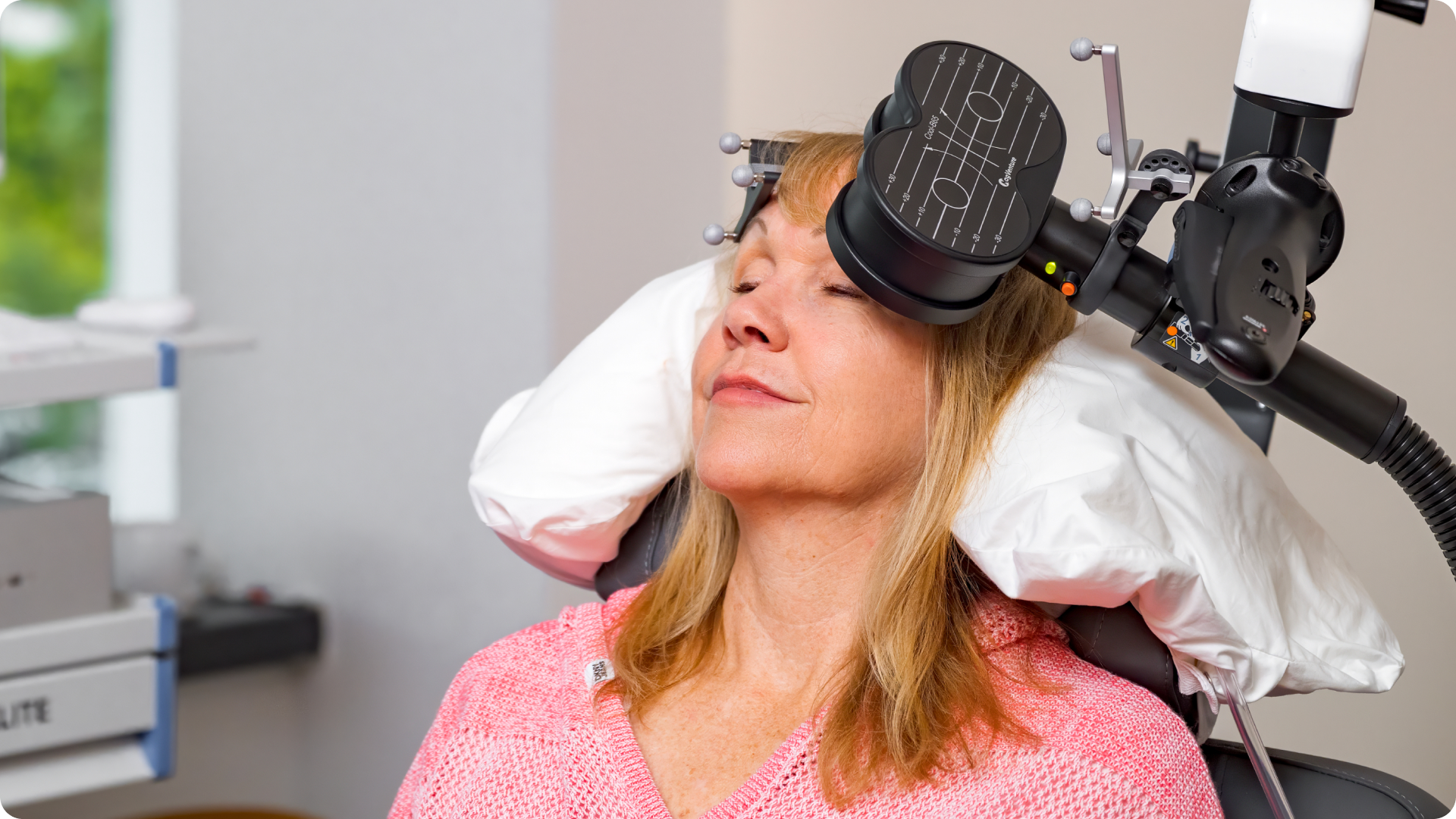
“My depression was like a gray fog surrounding me. There was a constant loop of negative thoughts in my head. Everything felt hard and overwhelming, and I felt guilty because I had a great life with wonderful family and friends, and yet I couldn’t seem to feel happiness or joy.”
- Valerie Zeko, SAINT® patient
When Valerie Zeko heard about a new treatment for depression, she was hopeful. Like many people living with treatment-resistant depression (TRD), the 55-year-old library assistant had struggled with the condition for decades. She had tried several antidepressants, but they either didn’t work or had intolerable side effects.
After each failed course, hope became harder to hold onto.
She is not alone—an estimated 30% of people with major depressive disorder develop TRD, meaning their symptoms persist despite trying multiple antidepressant treatments.
“By the time many patients come to us, they have spent years trying treatment after treatment without lasting relief,” said Mohammed Ahmed, M.D., neuropsychiatrist and clinical director at Salma Health. “A more personalized, interventional approach gives us a chance to understand the person’s full story and match the appropriate care to what they actually need at that time in their life.”
That possibility became personal for Valerie in the summer of 2023, when a friend told her about a trial at Stanford University’s Brain Stimulation Lab. The trial was testing an innovative therapy called SAINT (Stanford Accelerated Intelligent Neuromodulation Therapy)—an advanced, accelerated, functional MRI-guided form of transcranial magnetic stimulation (TMS) that delivers rapid magnetic pulses to targeted brain regions involved in emotional regulation.
Unlike standard TMS, which is delivered over several weeks, SAINT therapy is delivered 10 times a day over five consecutive days. Clinicians use functional MRI brain imaging to identify the precise neural circuits for each patient’s depression, then deliver targeted magnetic stimulation to that area in short, repeated sessions separated by rest periods.
While Valerie had been considering traditional TMS treatment, SAINT’s personalized approach and its shorter treatment course appealed to her. Deciding she had nothing to lose, Valerie applied and was accepted into the study in November 2023.
“For each treatment, they placed a device on my left forehead and scalp area that delivered rhythmic tapping pulsations,” she explains. “It was an odd, slightly unpleasant sensation that felt like a rubber band snap; however, I quickly got used to it, closed my eyes, and imagined the treatment as a deep tissue massage—it hurts, but you know it’s helping.”
The study was randomized, meaning participants did not know whether they were receiving the active treatment or a sham treatment. After two days, Valerie felt certain she was receiving the real therapy and that it was working.
“I went to bed after the second day of treatment feeling worried, wondering if I was in the sham group. I woke up around midnight, feeling an overwhelming sense of well-being flowing through my whole body,” Valerie said. “It felt so wonderful that I didn’t want to go back to sleep. I felt joyful, and I just wanted to savor the feeling of being alive.”
A New Direction in Depression Treatment
Valerie’s experience is part of a growing body of research suggesting that precision brain-based therapies could transform how severe depression is treated, especially for patients who have exhausted traditional options.
“We have brought mental health treatment into the same precision framework as the rest of medicine,” said Brandon Bentzley, M.D., Ph.D., the past director of innovation at the Stanford Brain Stimulation Lab, and a lead author of SAINT’s® (Stanford Accelerated Intelligent Neuromodulation Therapy) first double-blinded, randomized controlled trial, published in The American Journal of Psychiatry in 2021.
In that trial, active SAINT treatment produced remission rates that were significantly higher than sham treatment after the five-day course. Nearly 80% of participants with severe treatment-resistant depression achieved remission within days of treatment, a rate significantly higher and faster than other currently available therapies.
The research helped support a major regulatory milestone: in September 2022, the U.S. Food and Drug Administration granted 510(k) clearance for the SAINT neuromodulation system for adults with major depressive disorder who have not achieved satisfactory improvement from prior antidepressant medications.
More recently, the second double-blind, sham-controlled randomized trial offered another important test: could the effect be replicated in a new and larger sample? Published in World Psychiatry in 2026, the study enrolled 53 people with treatment-resistant depression and randomized 48 participants who continued to meet study criteria to active or sham treatment. At one month, remission was achieved by 50% of participants receiving active SAINT, compared with 20.8% receiving sham treatment.
Ian Kratter, M.D., Ph.D., lead author of the study, and colleagues concluded that the second study “replicates SAINT’s therapeutic efficacy” and also points toward measurable brain activity patterns that may help researchers better understand why the treatment works and who may be most likely to benefit.
For patients, the key point is simpler: SAINT is not just a faster version of TMS. It reflects a shift toward more personalized neuromodulation, in which treatment is targeted to the individual brain rather than delivered as a one-size-fits-all approach.
How Long Does the Treatment Last?
While studies show strong evidence that SAINT can treat treatment-resistant depression, researchers are still working to understand how long its benefits last and which patients may need maintenance treatment.
Clinical trial data suggest that remission after a single five-day course of treatment can last anywhere from several months to years for some patients. Others may require periodic maintenance treatments to remain in remission for a year or longer. Relapse is not unique to SAINT, as symptoms often recur with conventional depression treatments as well.
Valerie Today
For Valerie, relief from her depression began after only two days of SAINT treatment and lasted nearly 18 months. During that time, the heaviness that had long defined her inner world lifted. The negative thoughts that once tortured her were gone, replaced by peace and clarity. The change wasn’t subtle—it was immediate, unmistakable, and life-changing.
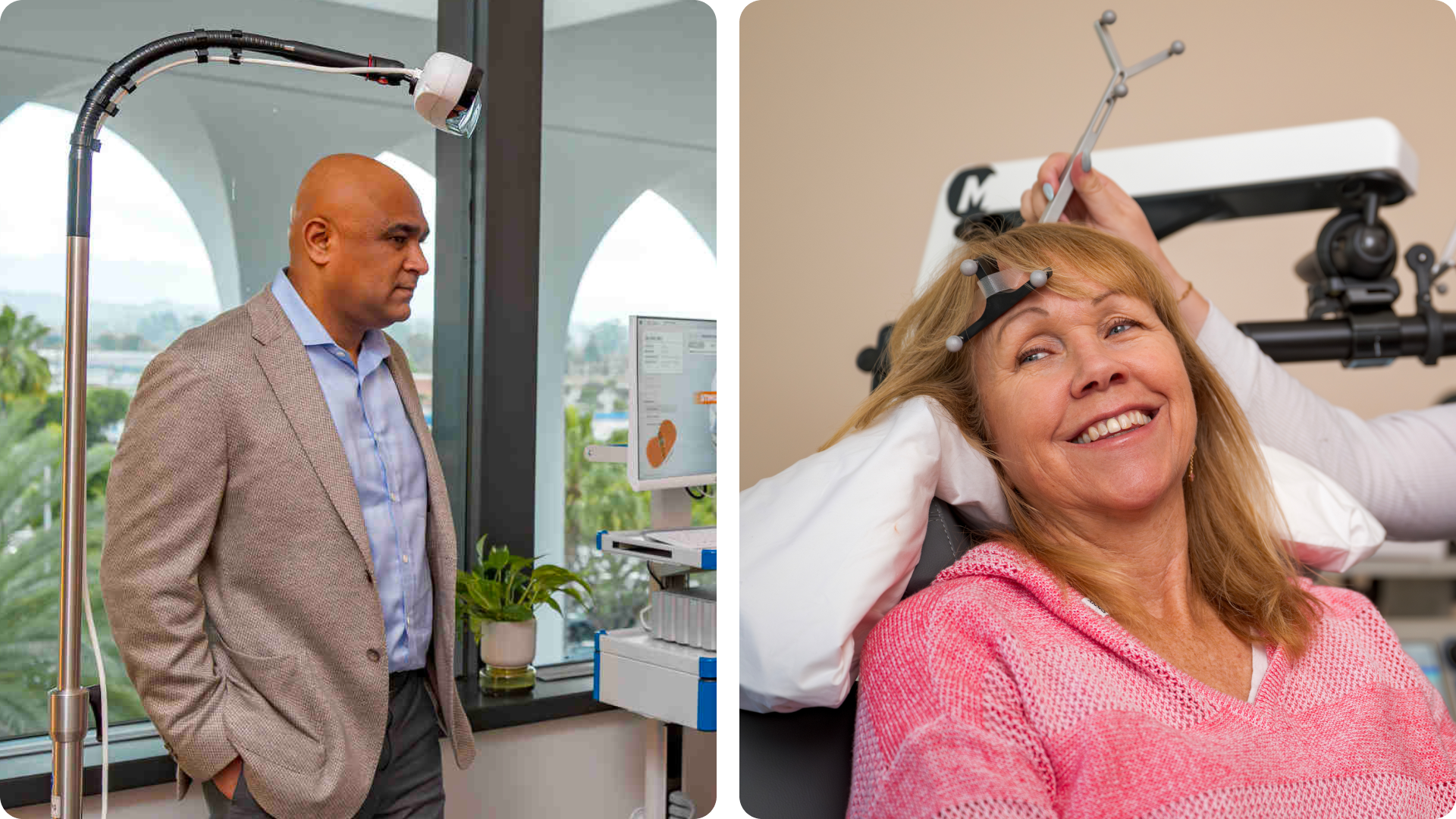
Then, Valerie began noticing the return of depressive symptoms. Recognizing the signs, she sought SAINT treatment with neuropsychiatrist Mohammed Ahmed, M.D., clinical director at Salma Health.
She underwent another five-day course of treatment at the Salma Health clinic in Laguna Hills, California, in early April 2026. This time, the benefits took longer to emerge—nearly a week after the five-day treatment ended.
According to Dr. Ahmed, that isn’t unusual. The effects of SAINT can take up to two weeks for a full response, even if the patient experienced a quicker response previously.
“The brain is our most complex organ, and no two responses are exactly the same,” explains Dr. Ahmed. “But we can rely on a growing body of scientific evidence showing that targeted neuromodulation can meaningfully change the brain circuits involved in depression.”
For Valerie, the first sign that her depression was lifting was the realization that food started tasting noticeably better.
“I remembered that two years ago, after my first SAINT treatment, I’d had a similar experience with music. It sounded better and I thought, ‘Could this be my depression lifting? Are my senses waking up?’ Every day since that first sign, I’ve had more energy and focus. My mind sees solutions, not obstacles. My usual feelings of being overwhelmed and hopeless are gone. My eyes feel more open—like I’m more awake.”
What returned wasn’t just happiness; it was engagement: the ability to look forward to things and to participate in life without forcing herself through it. Activities no longer feel like obligations; they once again feel meaningful and enjoyable.
“I am so grateful I found this treatment,” Valerie said. “I feel like my depression doesn’t control me anymore.”
New Treatment Model for Mental Health
Stories like Valerie’s also point to why Salma Health is building a more connected model for people with complex depression and other mental health conditions. Instead of asking patients to navigate separate providers, delayed referrals and trial-and-error treatment on their own, Salma Health brings advanced diagnostics, evidence-based interventions and ongoing care coordination into one integrated system.
“Salma Health seeks to break the cycle of fragmentation and trial-and-error approaches that often result in delayed diagnoses, ineffective treatments and poor outcomes for patients with chronic mental health conditions like major depression,” Dr. Bentzley said. “SAINT is a treatment that will help us do that for people who have suffered far too long without relief.”
For researchers and clinicians working to develop precision neuromodulation therapies, stories like Valerie’s offer a glimpse of what the future of depression treatment may look like: One in which targeted brain-based interventions provide relief for patients who have long exhausted traditional options.
For millions living with treatment-resistant depression, the chance to reclaim their lives may finally be within reach.
- https://pmc.ncbi.nlm.nih.gov/articles/PMC10503923/
- https://psychiatryonline.org/doi/10.1176/appi.ajp.2021.20101429
- https://pmc.ncbi.nlm.nih.gov/articles/PMC12805067/
- https://psychiatryonline.org/doi/10.1176/appi.ajp.2021.20101429
- https://pmc.ncbi.nlm.nih.gov/articles/PMC12805067/
- https://www.sciencedirect.com/science/article/pii/S1935861X25000877
Why Salma Health?
With locations in La Jolla, Laguna Hills, and the Bay Area, Salma Health offers advanced mental and behavioral health care in California, with both in-person and virtual options. We support individuals living with depression, anxiety, PTSD, OCD, brain injuries, and related conditions, using personalized, science-backed approaches.
Start Your Journey Today
Getting started doesn’t have to be overwhelming. You can begin with a 15-minute Care Options Call, connect with our care team, complete a comprehensive intake, or schedule online. We meet you where you are and build care around your needs. Schedule your first appointment today and experience a higher standard of brain care—grounded in science, clarity, and continuity.
Related Articles


.avif)
.png)


The professional services made available through Salma Health, Inc. are provided by licensed clinicians affiliated with independently owned and operated professional practices, including Center for Neurohealth, Inc., dba Salma Health, Ocean Psychiatry, Inc, and Salma Health LLC. Salma Health, Inc. provides administrative, technology and other related services to the professional practices it supports and does not itself provide any medical, mental health or other healthcare provider services. The content on this website has been reviewed by Center for Neurohealth, Inc., dba Salma Health, Ocean Psychiatry, Inc, and Salma Health LLC. The content on this website is for information purposes only and is not a substitute for professional medical advice, diagnosis or treatment.
