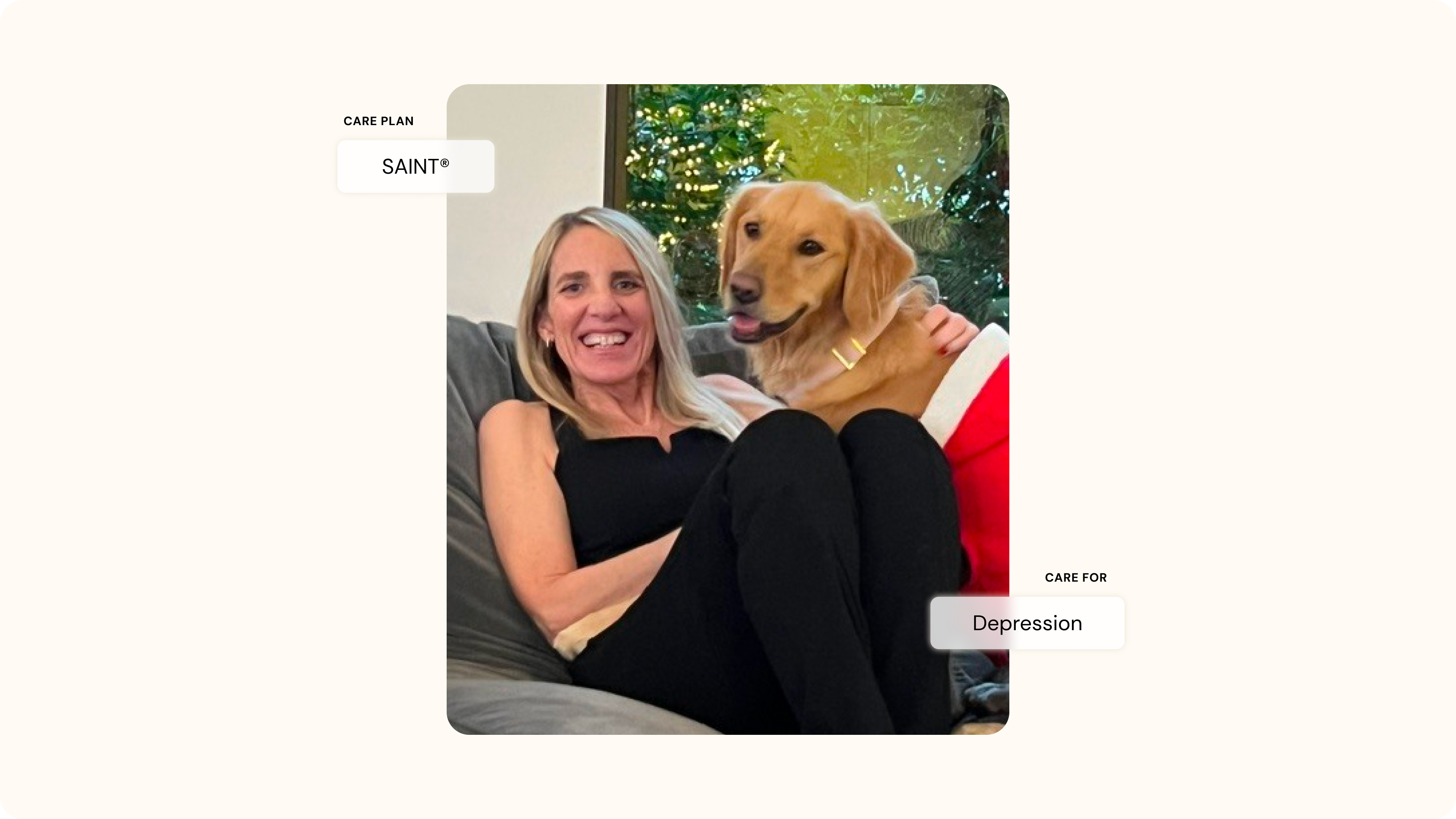
What is depression?
Depression is a mood disorder and one of the most common brain health conditions. It affects how you think, feel and function day-to-day. It can make even small tasks feel heavy, impact your relationships and change how you experience joy, motivation and meaning. With the right care, recovery is possible.
We understand that depression looks different for everyone and that for many people, traditional treatments may not have worked. That’s why we’ve built a model designed to uncover the underlying factors contributing to your symptoms and guide you toward the right treatment, for your specific needs.
High-functioning depression
Many people with depression managed to hide their condition from those around them. They appear happy or at least happy enough despite persistent feelings of deep sadness, apathy or hopelessness. “Masked depression” and “smiling depression" are other terms used to describe high-functioning depression.
Although it may sound less serious than depression that is outwardly obvious, this type of depression needs to be addressed before it escalates, even if the person experiencing it is able to maintain work, relationships and daily responsibilities. If that describes you, know that you have many highly effective treatment options, and that the first step to feeling better is connecting with a licensed mental health care provider.
Types of depression we treat
At Salma Health, we treat multiple forms of depression, from mild to severe, including:
- Major Depressive Disorder (MDD)
- Persistent Depressive Disorder (Dysthymia)
- Perinatal and Postpartum Depression (PPD)
- Seasonal Affective Disorder (SAD)
- Depression with Anxiety
- Premenstrual Dysphoric Disorder (PMDD)
- Bipolar Depression
- Treatment-Resistant Depression (TRD)
- Adjustment Disorders
Treatment-resistant depression
Treatment-resistant depression describes any type of depression that hasn’t improved significantly after two or more standard treatment methods. For example, often someone diagnosed with depression is prescribed a type of daily medication called a selective serotonin reuptake inhibitor (SSRI), an evidence-based first-line treatment. If they don’t notice improvement after 4-6 weeks their provider will likely prescribe them a different medication—and if that second medication doesn’t work either, their depression would be classified as treatment-resistant.
Salma Health specializes in treatment-resistant depression. During a thorough mental health intake we’ll learn about your symptoms, treatment history and factors that may be contributing to your symptoms. Then we’ll recommend a treatment plan that may include advanced treatments like TMS, SAINT® TMS, or Spravato. These treatments are FDA-cleared or FDA-approved for people with treatment-resistant depression, and they work in entirely different ways than standard prescription medications do. They often work quickly too. SAINT is administered over five days and many patients report improvements even before treatment is completed.
Common depression symptoms
While depression shows up differently for each person, common symptoms may include:
- Persistent sadness, emptiness, or hopelessness
- Loss of interest or pleasure in activities once enjoyed
- Changes in appetite or weight
- Sleep difficulties (insomnia or oversleeping)
- Fatigue or lack of energy
- Difficulty concentrating or making decisions
- Feelings of guilt, worthlessness, or failure
- Physical pain without a clear cause
- Thoughts of death, self-harm, or suicide
Our diagnostic process
We don't believe in cookie-cutter approaches to addressing depression. At Salma Health we take the time to understand your full story so we can build a plan tailored to your individual needs and most likely to bring relief. Our diagnostic process combines clinical expertise with advanced assessment tools to evaluate brain function and identify the factors that may be affecting your brain health.
1. Comprehensive evaluation
Your first visit is an in-depth, structured mental health intake session designed to help us understand your symptoms, such as anhedonia, sadness and sleep challenges and what may be contributing to them. During this evaluation, our clinicians review your medical and mental health history, family background, daily functioning and your experience with prior mental health treatments. We take a whole-person approach, looking at the full picture of your health to guide the best next steps in your care.
2. Screening tools
We use validated, evidence-based tools such as the PHQ-9 to measure depression, GAD-7 to measure anxiety (which often co-occurs with depression) and other structured questionnaires to assess the severity of symptoms and their impacts on your life. These tools also help us track your progress throughout treatment, ensuring that every step forward is measured and meaningful.
3. Advanced diagnostics
When appropriate, your clinician may recommend additional assessments to deepen understanding of what’s causing your condition and guide precision treatment. Together, these insights allow us to move beyond trial-and-error and design care that’s truly individualized. These tests may include:
- Neurocognitive testing to evaluate attention, memory and processing speed and rule out other causes of low mood
- EEG and qEEG to study brainwave patterns associated with mood and cognition to identify treatment-resistant patterns and rule out other causes of low mood.
- Lab work to assess potential medical causes or contributors, such as inflammation, hormones, or nutrient deficiencies.
- Standardized psychological testing to assess patterns of thought, behavior and emotional functioning and better understand strengths, challenges and brain health needs.
Depression treatment options
There's no single path to recovery. At Salma Health, we combine proven first-line approaches like therapy and medication management, with newer options like SAINT® and TMS so your care fits your specific needs.
Neuromodulation and interventional care
- SAINT® (Stanford Accelerated Intelligent Neuromodulation Therapy) - an advanced, FDA-cleared form of TMS, shown to achieve rapid and durable remission in treatment-resistant depression.
- Transcranial Magnetic Stimulation (TMS) - a noninvasive, medication-free therapy that stimulates targeted brain regions involved in mood regulation.
- SPRAVATO® (esketamine nasal spray) - fast-acting treatment for adults with major depressive disorder who haven’t found relief from traditional antidepressants.
Therapy, medication and lifestyle care
Care also includes psychotherapy that adapts to your goals and history, medication management to support and monitor your treatment plan and lifestyle interventions that address sleep, movement and stress. For those who need more structured support, our virtual intensive outpatient program (IOP) offers a higher level of care without requiring hospitalization.
Our care doesn’t end when symptoms improve. We partner with you to maintain progress, prevent relapse and strengthen your overall resilience. However, if you already work with a therapist or psychiatrist you can choose to maintain that relationship while you pursue advanced treatments at Salma Health, and with your consent our provider team will keep your therapist or psychiatrist informed of your treatment plan and progress.
For those looking beyond standard care, we're actively enrolling clinical trials in neurology and psychiatry. Explore our open trials and join our patient registry to be notified when new ones open. We believe everyone deserves access to the latest medical advances.
Why choose Salma Health?
We've reimagined how depression care should feel: integrated, proactive and personal. Every treatment plan is built around your unique biology, history and goals, whether you're managing high-functioning depression or a treatment-resistant case that hasn't responded to standard care.
Our clinical team, psychiatrists, neurologists, therapists, specialists and care coordinators, work together rather than in isolation, using advanced diagnostics to identify what's driving your depression and act on it faster. Much of the care we provide is available virtually, and we work with most major insurance providers, with our team on hand to help verify your benefits.