How to Support Someone Dealing with Depression: A Practical Guide
- Depression is more than sadness. It’s a brain health condition that can affect mood, sleep, appetite, energy, concentration and the ability to engage in daily life.
- The most helpful support is often steady and practical. Showing up consistently, listening without judgment, offering specific help and checking in.
- Knowing what to say and what to avoid can reduce unintentional harm.
- If someone is experiencing severe or treatment-resistant depression, professional care is essential and options like TMS therapy and SAINT TMS may help when other treatments haven't worked.
- Any mention of self-harm or suicide should be treated as a medical emergency.

When someone you care about has depression, it can be difficult to know what to do. You may worry about saying the wrong thing, pushing too hard or not doing enough. Learning how to support someone with depression doesn’t mean becoming their therapist; it means staying present, making daily life a little easier and helping them connect with the right resources when they need it.
The first step in supporting your loved one is remembering that depression is not a weakness, it is not a mindset problem and it is not laziness. It’s a brain health condition that can make ordinary tasks feel heavy. Relationships may feel distant and hope feels impossible to reach.
How to Recognize Depression
Depression doesn't always look like crying or sadness. Some people become quiet and some get irritable. Some are able to continue functioning while privately feeling numb or exhausted.
It’s important to watch for changes that persist over two weeks or more, including:
- Withdrawal from friends, family or activities they once enjoyed
- Persistent low mood, tearfulness or emotional flatness
- Noticeable changes in sleep — sleeping too much or too little
- Low energy, or moving or speaking more slowly than usual
- Difficulty concentrating or making decisions
- Increased irritability or hopelessness
- Neglecting personal hygiene or daily responsibilities
Not everyone with depression will show all of these signs and some people may mask their symptoms entirely. If something feels off, trust that instinct and gently check in.
6 Ways to Help Someone With Depression
You can’t single-handedly solve your loved one’s depression, as much as you might want to. The most helpful support is specific, steady and low pressure.
1. Listen First
One of the most powerful things you can do is simply listen. Resist the urge to offer solutions, reframe their perspective, or minimize what they're feeling. Phrases like "just think positive" or "you have so much to be grateful for" can leave someone feeling more alone and misunderstood.
Instead, make space for what they're experiencing. Being truly heard is something many people with depression rarely feel.
2. Offer Practical Help
Vague offers like "let me know if you need anything" are easy to brush off, especially when someone lacks the energy or confidence to ask for help. Concrete offers are far more effective: "I'm going to the grocery store. Can I grab anything for you?" or "I'll pick you up at noon for a walk."
3. Keep Showing Up
Depression often makes people pull away. A short text, a quiet visit, or a standing invitation can matter more than you realize. Consistency signals that your care isn't conditional on their performance. Over time, that steadiness can be a lifeline.
4. Encourage Professional Help
If symptoms are persistent or interfering with daily life, consider talking with a mental health provider, therapist or psychiatrist. Offer to help with the first step. Research suggests that loved ones play a significant role in whether someone seeks treatment and how soon.
You can offer to help them find a provider, sit with them while they make a call, or go with them to a first appointment if they'd like. For more guidance on how to approach this, see our resource on how to support loved ones with brain health conditions.
5. Notice Effort
Getting out of bed, answering a message, or making a call can take real work. Acknowledge the effort without turning it into pressure to be better.
6. Ask What Helps
Depression feels different for different people. Ask what makes a bad day easier, then remember it. Taking time to understand what your loved one may actually be experiencing, rather than what you imagine depression looks like, can make your support feel more genuine and less like a checklist.
What to Say and What to Avoid
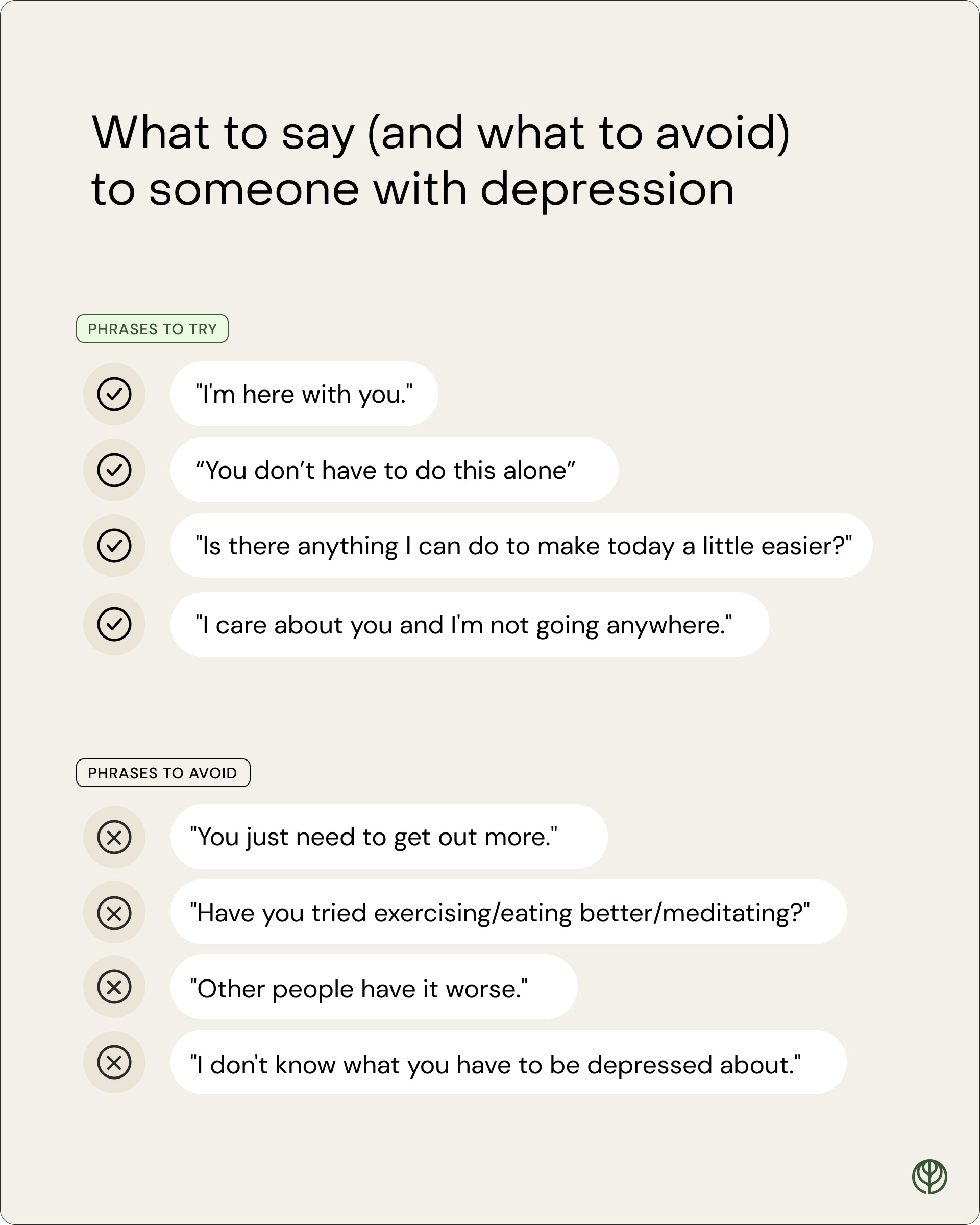
Try:
- "I'm here with you."
- "You don't have to go through this alone."
- "Is there anything I can do to make today a little easier?"
- "I care about you and I'm not going anywhere."
Avoid:
- "You just need to get out more."
- "Have you tried exercising/eating better/meditating?"
- "Other people have it worse."
- "I don't know what you have to be depressed about."
The unhelpful comments come from a good place. The problem is that they can make depression sound like a choice or a failure of effort. It’s best to keep the focus on care, not correction.
How to Help Someone With Severe Depression
Severe depression can interfere with basic functioning — eating, bathing, sleeping, taking medication, working, parenting, or staying safe. In these moments, support may need to be more active.
- Ask directly about safety: “Are you thinking about hurting yourself?
- Help them contact their clinician if symptoms are worsening.
- Offer concrete support with meals, transportation, childcare, errands or appointments.
- Monitor for warning signs such as increased hopelessness, isolation, or talk of not wanting to be here.
- Bring in trusted family, friends, or care team members when safety or functioning is a concern.
Severe depression requires professional care. If someone is already in treatment but getting worse, it may be time to reassess the plan rather than simply trying harder with the same approach.
How to Help Someone With Treatment-Resistant Depression
For some people, standard treatments including antidepressants, therapy, or both, don't provide adequate relief. This is known as treatment-resistant depression or TRD, and it's more common than many realize. It can be deeply discouraging for both the person experiencing it and those who love them.
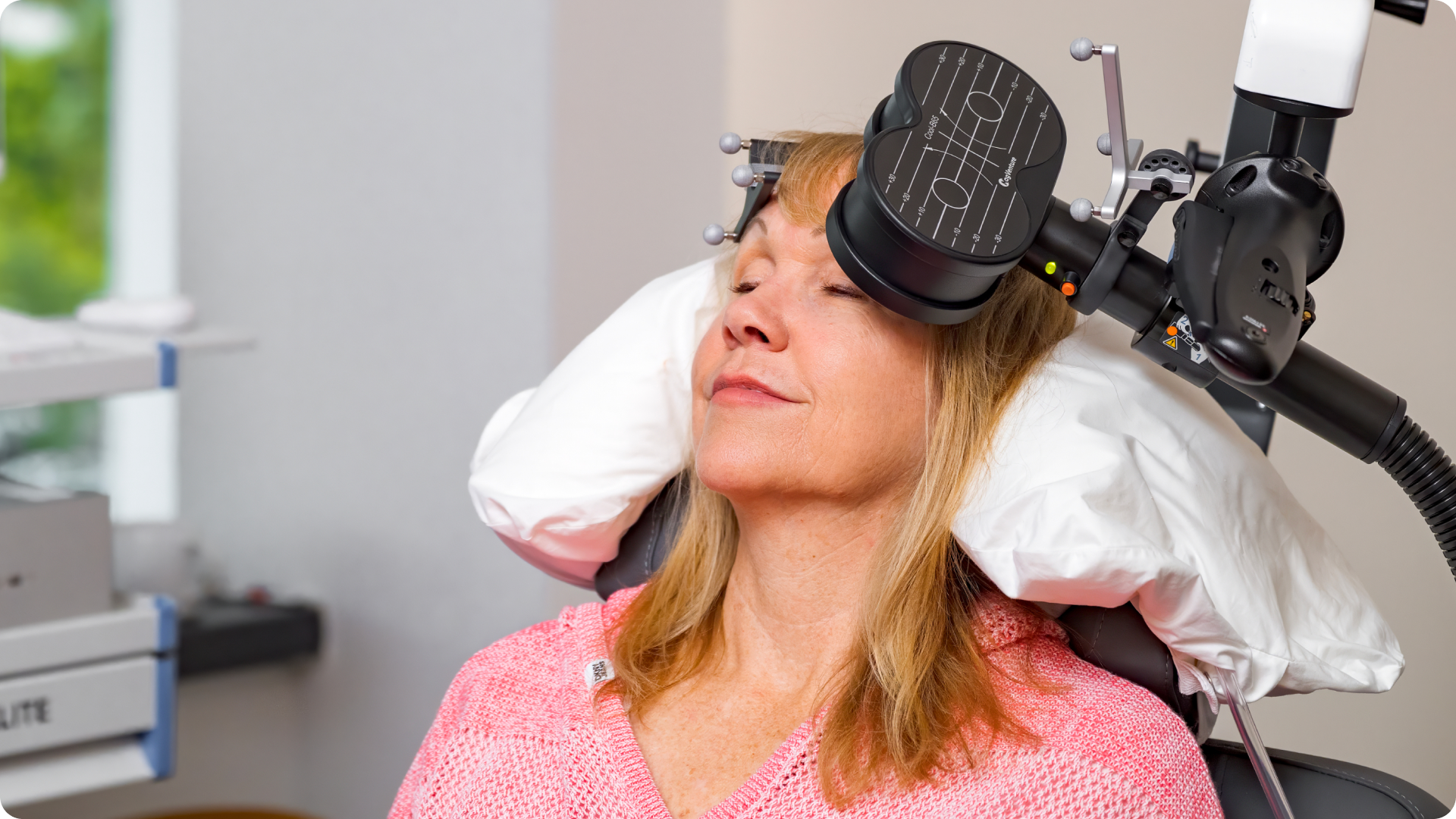
If someone you care about has tried multiple treatments without enough relief, encourage them to speak with a specialist. A more personalized plan may include advanced diagnostics, medication adjustments, TMS therapy (transcranial magnetic stimulation), Spravato® (Esketamine) treatment or SAINT® (accelerated TMS).
For families, the job is not to choose the treatment, but rather to help the person stay connected to care long enough to find the right next step.
When to Seek Immediate Help
If someone talks about suicide, self-harm, wanting to die, or feeling like others would be better off without them, take it seriously every time. Don’t leave them alone and don’t promise to keep it secret.
- Ask them directly: "Are you thinking about ending your life?" Asking does not plant the idea; it opens the door to a conversation that may be life-saving.
- Stay with them and help them contact a crisis line or emergency service.
- Call or text 988 (Suicide and Crisis Lifeline) together or go to the nearest emergency room.
Supporting Someone With Depression
Helping someone with depression isn't about saying the right thing or following a perfect script. It's about staying present even when things are hard, listening well, offering real help and encouraging professional care when the symptoms are bigger than what love alone can hold.
At Salma Health, we believe care should begin with understanding the whole person, not just the diagnosis. For people living with severe or treatment-resistant depression, the right care plan can open a path toward relief, progress and a life that feels more possible.
Why Salma Health?
With locations in La Jolla, Laguna Hills, and the Bay Area, Salma Health offers advanced mental and behavioral health care in California, with both in-person and virtual options. We support individuals living with depression, anxiety, PTSD, OCD, brain injuries, and related conditions, using personalized, science-backed approaches.
Start Your Journey Today
Getting started doesn’t have to be overwhelming. You can begin with a 15-minute Care Options Call, connect with our care team, complete a comprehensive intake, or schedule online. We meet you where you are and build care around your needs. Schedule your first appointment today and experience a higher standard of brain care—grounded in science, clarity, and continuity.
Related Articles

.png)



The professional services made available through Salma Health, Inc. are provided by licensed clinicians affiliated with independently owned and operated professional practices, including Center for Neurohealth, Inc., dba Salma Health, Ocean Psychiatry, Inc, and Salma Health LLC. Salma Health, Inc. provides administrative, technology and other related services to the professional practices it supports and does not itself provide any medical, mental health or other healthcare provider services. The content on this website has been reviewed by Center for Neurohealth, Inc., dba Salma Health, Ocean Psychiatry, Inc, and Salma Health LLC. The content on this website is for information purposes only and is not a substitute for professional medical advice, diagnosis or treatment.
