
My Journey Through Depression: Never Giving Up on Finding the Right Treatment
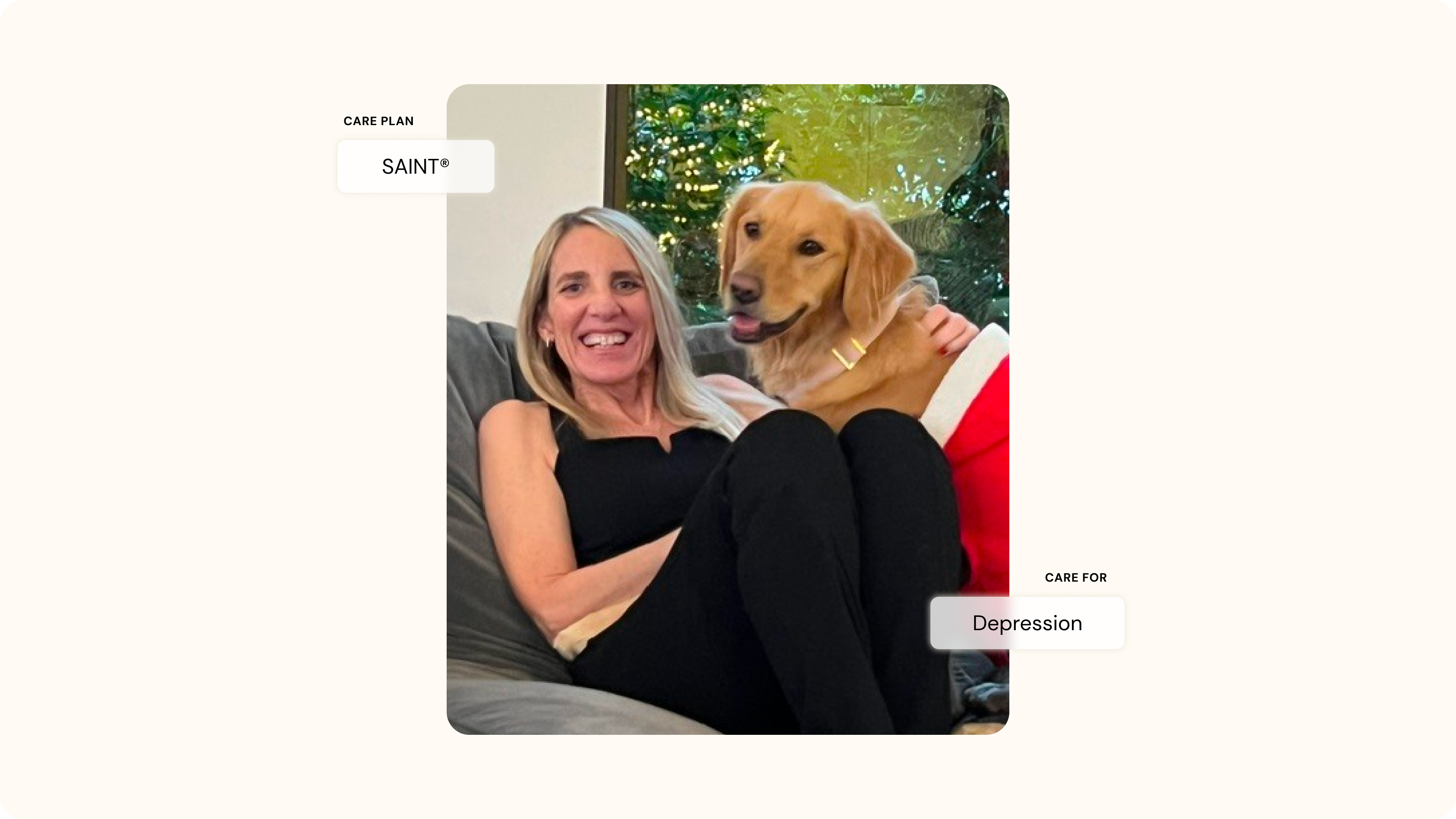
Depression can steal almost everything from you. It can also make it feel impossible to seek help
For more than two decades, I lived with depression that never seemed to loosen its grip for long. Every time I thought I had found something that might finally help, the relief quickly faded and I was back to square one, which was often a very dark place.
Over the years, I tried countless antidepressants, therapy, conventional TMS and years of ketamine infusions. I never stopped looking because I knew what my depression was capable of, and I was terrified of going back there. I also had family and friends who never stopped believing in me, and I wanted to get better for them as much as I wanted it for myself.
I don't believe my depression was caused by one traumatic event. Although I lost my mother and went through a divorce after many years of marriage, my depression had begun long before either of those things happened. To me, it has always felt like a medical illness that required the right medical treatment. The challenge was finding one that would last.
A long search for lasting relief
When my depression first began more than 20 years ago, it was a condition my primary care physician and I managed, but it took a game plan that evolved: He prescribed antidepressants that would help for a while, but then my symptoms would return and we'd start over with another medication, a different dose or a new combination. Later, I was referred to a psychiatrist who worked closely with me for years, continually adjusting my treatment in hopes of finding something that would provide lasting relief. Genetic testing suggested that I metabolize certain medications quickly, which may explain why many stopped helping after a relatively short time.
About eight years ago, I tried a course of traditional TMS (transcranial magnetic stimulation). It worked well—for about six months. Then my depression returned.
My first catatonic episode
Around 2019, everything changed. My depression became much more severe, and in 2020, I experienced my first catatonic episode. I was essentially bedridden. I could barely walk. I wasn't really living; I was simply existing. My daughter's help during that time was the only way I could have gotten through it.
How ketamine helped
My psychiatrist, who has always been very invested in my health and well-being, prescribed ketamine. It truly kept me alive for years, and I will always be grateful for it. I received carefully monitored, low-dose IV treatments from an anesthesiologist. Ketamine allowed me to keep functioning, but it didn't provide long-term relief. During my worst depressive episodes, I sometimes needed treatments three times a week, and I could rarely go more than two weeks before my depression began creeping back. My doctor told me this was very atypical; most people need fewer treatments and experience more relief.
The treatments themselves weren't easy. I often experienced frightening hallucinations during the infusions, although my doctor assured me they were a normal part of treatment. Through it all, I was incredibly fortunate to have wonderful friends who drove me to appointments, waited for me and took me home afterward because I couldn't drive myself.
Looking back, I often felt like a cancer patient being driven to lifesaving chemotherapy. My friends never complained. They simply kept showing up for me during one of the hardest periods of my life.
A medical crisis left me needing another option
Earlier this year, I felt myself slipping into another severe depressive episode. I was terrified that I was heading back toward catatonia.
My psychiatrist and I decided to try increasing one of my antidepressants. He explained there was a small risk of serotonin syndrome, although he didn't think it was likely given my medication history. At that point, I was willing to do almost anything to avoid becoming catatonic again.
I knew the warning signs of serotonin syndrome, so when I began experiencing symptoms, a friend immediately drove me to the emergency room. I assumed I would receive treatment and go home. Instead, I was hospitalized. I remember virtually nothing of the next six days. I needed home health care to recover and was left physically and emotionally exhausted. The experience reinforced just how desperately I needed another option.
Finding SAINT® was only the first step
Throughout those years, I never stopped researching new treatments. I had followed the research on SAINT for years and even encouraged a friend to apply for an early clinical trial. Although I wasn't eligible myself, I kept looking for another opportunity through a clinical trial or insurance coverage because paying for the treatment out of pocket wasn't an option for me.
To be honest, SAINT sounded almost too good to be true.
What many people don't understand about severe depression is that it steals almost everything from you – your physical health, your sense of well-being and your soul. It even steals your ability to do the very things that might help you get better.
Even the simple task of completing the intake forms felt overwhelming. They weren't difficult, but my depression convinced me they were. Weeks turned into months while I kept telling myself I would finish them tomorrow.
Once again, my friends stepped in to help. One of them gently kept encouraging me to complete the paperwork. She offered to sit with me while I filled everything out. Looking back now, it's hard to believe something so simple felt so impossible.
When I finally submitted the forms, I was approved by my insurance almost immediately.
What SAINT was like for me
I received SAINT at Salma Health about three months ago.
To be honest, I arrived feeling more hopeless than hopeful. Part of me thought the treatment might work, but another part kept thinking, "It probably won't. What will I do then?" After so many years of trying one treatment after another, I was almost afraid to let myself hope.
The treatment itself wasn't difficult. The waiting afterward was. Dr. Ahmed and the staff kept encouraging me to trust the process. I wanted so badly to feel better that when I didn't notice any changes during the five-day treatment, I worried I might be out of options once again.
Quiet changes
About two weeks after I returned home, I began noticing small but meaningful changes. There wasn't one dramatic moment or a lightning bolt that suddenly made everything different. Instead, I slowly realized I had the energy to do things instead of simply thinking about doing them. One day I caught myself thinking, "I'm getting things done. This is weird. This is different." Next, I found myself making plans, being social and truly enjoying life again.
My friends noticed the changes before I fully did. They told me my facial expressions had changed, that my eyes looked brighter and that even the tone of my voice had changed. Hearing that from the people who had stood by me through my darkest days made me realize just how much had changed.
Living again, not just surviving
What amazes me most isn't one extraordinary moment. It's all the ordinary ones.
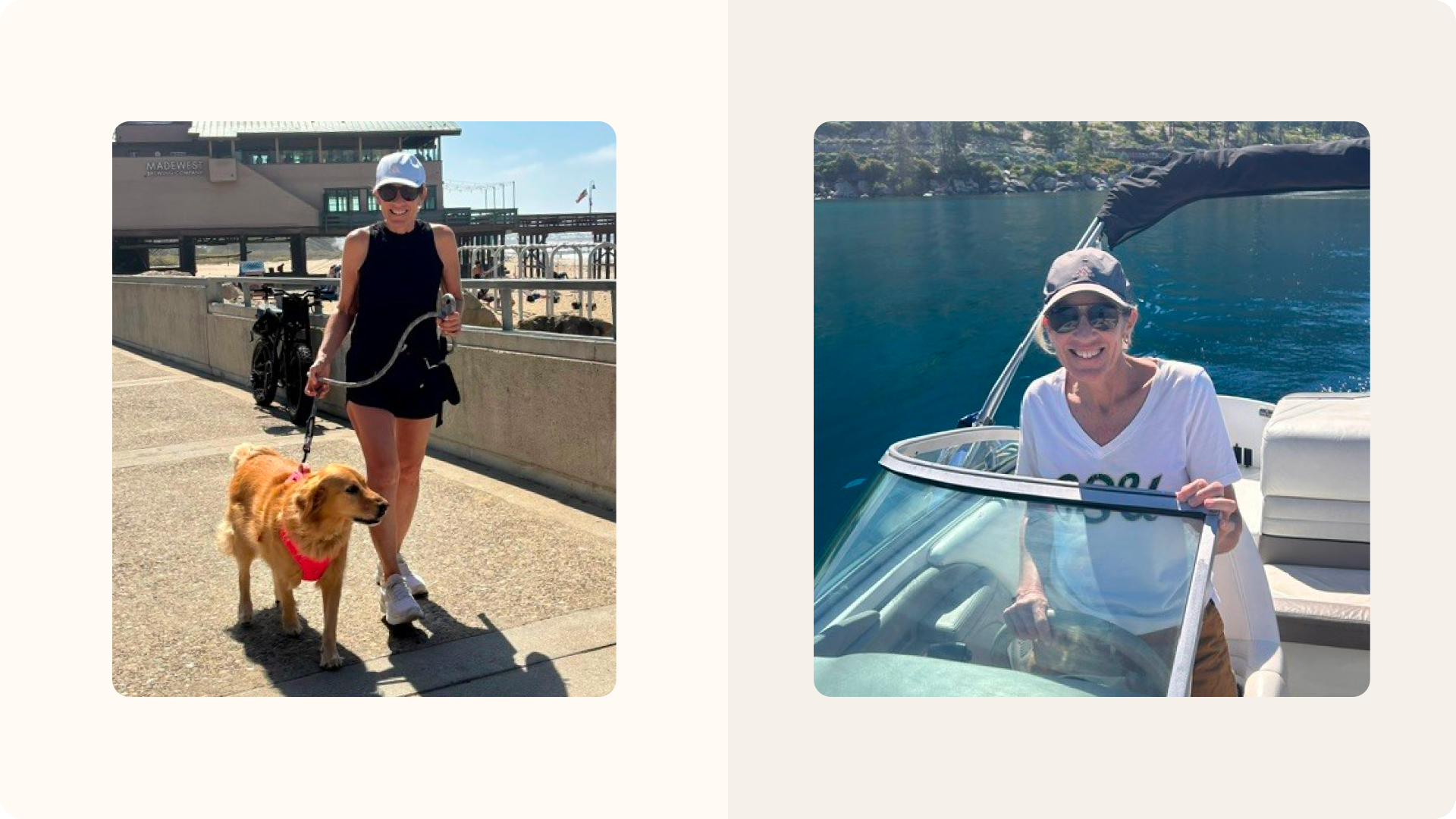
I can make plans without wondering whether I'll have to cancel because my depression has become overwhelming. I can be present when I am with my friends and family. I have the energy to enjoy long walks with my dogs, biking and going to the beach again. Instead of organizing my life around medical treatments, I'm now planning a special trip with my daughter as we celebrate milestone birthdays together. For the first time in years, destinations like Iceland or Bali don't feel overwhelming or too far away from the medical care I depended on—they simply feel exciting.
One of the moments that touched me most happened just after I finished my five-day SAINT treatment at Salma Health. The staff sent me a handwritten note acknowledging everything I had overcome. They told me my journey had inspired them and reminded me that I should be proud of myself for showing up every single day. I still have that note, and it means more to me than they probably realize. After spending so many years wondering if I would ever feel like myself again, it was a reminder of how far I had come and that other people could see the changes I was only beginning to recognize in myself.
For so many years, my life revolved around surviving depression. Today, it revolves around living again.
If sharing my story gives even one person hope to keep searching for answers, then it's worth telling. I know what it feels like to believe you've exhausted every option. I also know that the treatment you haven't tried yet might be the one that finally helps you find your way back.
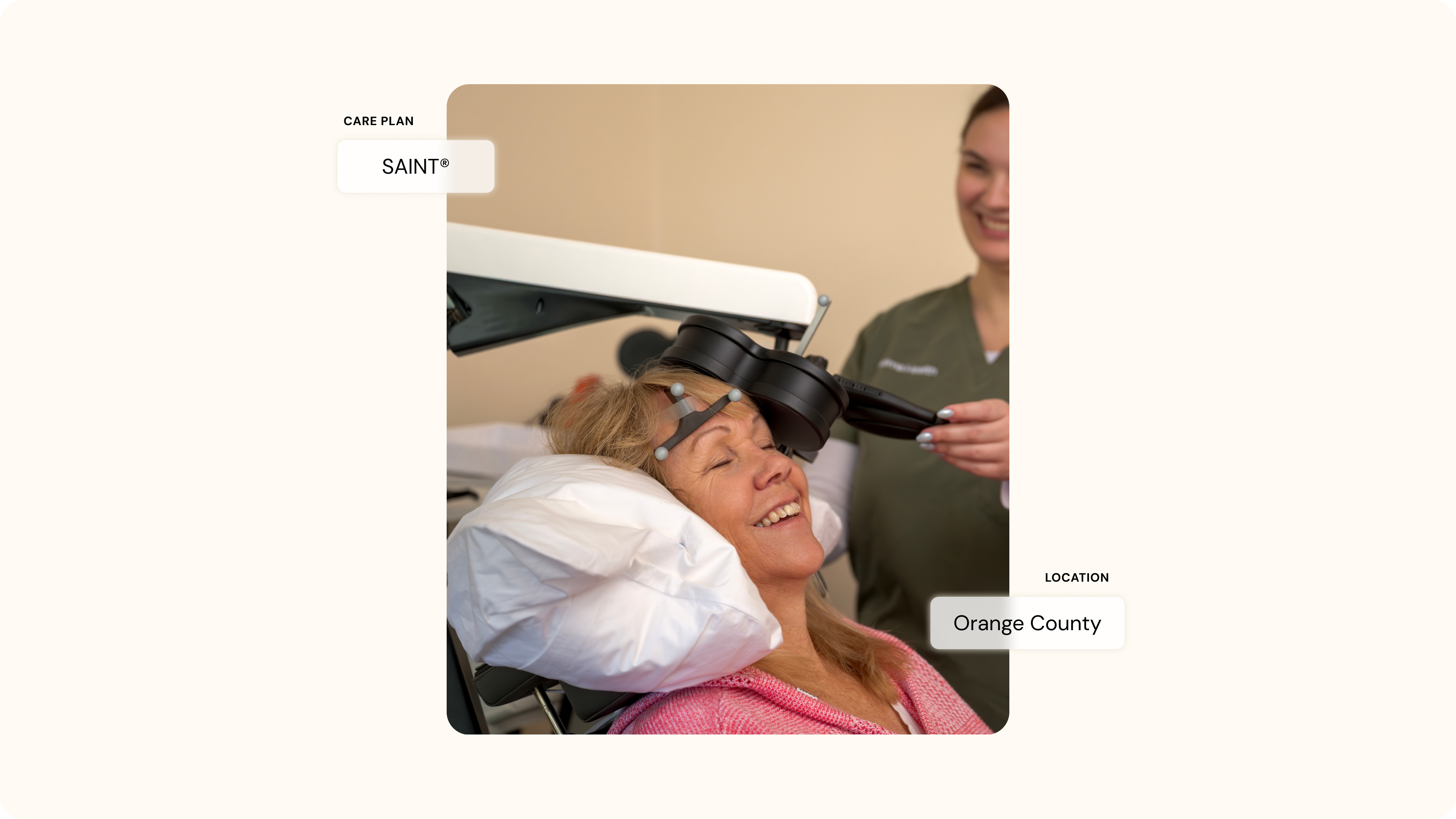
SAINT ® (Stanford Accelerated Intelligent Neuromodulation Therapy) is a five-day, functional MRI-guided form of TMS for treatment-resistant depression (TRD). It delivers rapid magnetic pulses to individually targeted brain regions involved in mood regulation, 10 times a day over five consecutive days. Learn more about SAINT.
Why Salma Health?
With locations in La Jolla, Laguna Hills, and the Bay Area, Salma Health offers advanced mental and behavioral health care in California, with both in-person and virtual options. We support individuals living with depression, anxiety, PTSD, OCD, brain injuries, and related conditions, using personalized, science-backed approaches.
Start Your Journey Today
Getting started doesn’t have to be overwhelming. You can begin with a 15-minute Care Options Call, connect with our care team, complete a comprehensive intake, or schedule online. We meet you where you are and build care around your needs. Schedule your first appointment today and experience a higher standard of brain care—grounded in science, clarity, and continuity.
.png)


The professional services made available through Salma Health, Inc. are provided by licensed clinicians affiliated with independently owned and operated professional practices, including Center for Neurohealth, Inc., dba Salma Health, Ocean Psychiatry, Inc, and Salma Health LLC. Salma Health, Inc. provides administrative, technology and other related services to the professional practices it supports and does not itself provide any medical, mental health or other healthcare provider services. The content on this website has been reviewed by Center for Neurohealth, Inc., dba Salma Health, Ocean Psychiatry, Inc, and Salma Health LLC. The content on this website is for information purposes only and is not a substitute for professional medical advice, diagnosis or treatment.
