
Nolan Williams and the Case for Psychiatry 3.0
A decade of collaboration, a body of evidence and an argument the field is still catching up to.
.png)
Nolan Williams, M.D., was a professor of psychiatry and behavioral sciences at Stanford University School of Medicine, where he founded and directed the Brain Stimulation Laboratory (BSL) in 2015 and later led the clinical research program in interventional psychiatry. He developed SAINT®, the accelerated, imaging-guided form of magnetic brain stimulation that the Food and Drug Administration cleared in 2022 for treatment-resistant depression, and he designed and led the first rigorous study of ibogaine in special operations veterans living with traumatic brain injuries (TBI). He published more than 100 peer-reviewed papers and held more than a dozen patents. We cofounded Magnus to bring SAINT to the world. Then we co-founded Salma Health alongside Alaa Halawa, Zeena Ojjeh, Ayman AlAbdallah and Emily Phillips and an amazing team of brilliant minds in healthcare to make top-tier brain health treatments available to everyone. Nolan died on Oct. 8, 2025, at the age of 43.
I met Nolan at the Medical University of South Carolina in 2009, and over the years that followed, we became close friends and put our names together on 17 published papers, and counting. Those papers trace a major leap in the treatment of brain disorders, advanced across a decade, beginning with implanted devices in patients who had exhausted every available option, moving through the accelerated magnetic stimulation protocols that became SAINT (Stanford Accelerated Intelligent Neuromodulation Therapy), and continuing into the randomized controlled trials and real-world evidence that are still accumulating, even in his absence.
What the papers do not show is that our families grew up around that work. Over the years, our friendship grew to include our spouses and our children. We were part of the same academic, work and local communities. We simultaneously cultivated our families, friendships, companies, research and vision for what treatment of brain illnesses could be.
Our celebrations of research findings blended with family gatherings around holidays, our children playing and our wives lamenting that we worked too much, but who, as accomplished psychiatrists themselves, also uniquely understood the value of what we were all building together.
Nolan’s wife, Kristin Raj, M.D., a Stanford clinical professor of psychiatry and behavioral sciences, described Nolan afterward in terms anyone who worked with him will recognize. “I respected him deeply: his generosity, his brilliance, his dedication, his irreverence, his charm, his light.” For me, Nolan was an ever-present foundation of all aspects of our lives—omnipresent across all domains.
Despite being deeply close to so many healers, Nolan died of the illness he dedicated his career to treating. Nolan died by suicide; he had been living with an untreated psychiatric illness, yet he did not receive the treatments he championed or provide himself with the same compassion that he showed for countless others.
A leap forward
The foundation of Nolan’s career was that psychiatry had been organized around the wrong level of explanation. He described the field’s history in three phases, and the framing has since been widely adopted.
Psychiatry 1.0 was the era of psychotherapy, an approach he considered valuable but insufficient for the most severe illness. “Psychotherapy for severe depression where somebody’s in the hospital or [has] high levels of suicidal ideation, doesn’t really work in most cases,” he said.
Psychiatry 2.0 was the era of medication, built on the idea that depression reflects an imbalance of brain chemicals such as serotonin. That era produced a generation of drugs that were safer and easier to take than what came before, but it still left a large group of patients unwell after they had worked through every option the treatment guidelines offered.
Psychiatry 3.0, as he defined it, meant treating psychiatric illness as a problem in specific brain circuits rather than as a syndrome to be matched with a drug. “Whether it be Tourette syndrome or Parkinson’s or dystonia or OCD or depression, it’s all circuit disorders that need some sort of circuit intervention,” he said.
Brain illnesses like depression are a result of changes in specific networks of brain regions. If we think of Google Maps as a model of the brain, then the roads and live traffic data are the networks we can measure using structural and functional MRI. With this information, we can identify the specific roads and intersections with traffic in the wrong direction—a traffic problem that can produce the severe symptoms of depression, OCD, or other brain disorders.
Once the network problem is identified and mapped in an individual patient, we can make the smallest possible change in their brain that radically relieves their suffering. We can treat the person based on how the individual's brain network differs from that of people without symptoms, deliver treatment to correct the network difference, and then confirm it worked. That is what the rest of medicine does. Nolan believed psychiatry could do it too, and he spent 20 years showing that it could be done and that it was rapidly and profoundly life-changing for the patients treated.
Designed, not discovered
Our earliest work together used electrodes implanted between the brain and skull. At the time, we did not know what we know today about mapping individual brain circuits to find the best treatment targets, amplitudes, and frequencies. Implants were placed broadly across the frontal cortex bilaterally in patients whose depression had resisted everything else. The stimulator amplitudes and frequencies were tested painstakingly in an iterative process until symptoms improved. It was challenging for all involved, but the outcomes demonstrated striking improvements in symptoms that endured. In 2016 we reported five-year outcomes, and in 2018 we published on how to improve that approach.1 Those papers are rarely cited now, and they matter more than their citation counts suggest, because they established the principle that everything afterward depended on. In at least some patients, depression responds to stimulating specific parts of the brain with particular patterns, which makes the remaining questions about where, how much, and how often rather than about which drug.
.jpg)
SAINT is a treatment that was designed to address several major issues with mental health treatment simultaneously. Patients often travel from far away to be seen by physicians who take their insurance and specialize in difficult-to-treat cases. These trips are scheduled far in advance, and patients often take a day or more off from work to accommodate a clinic’s unforgiving schedule. This makes receiving a conventional TMS treatment, which requires daily treatments for six-plus weeks, completely unrealistic for many, if not most. People simply cannot risk this much time away from work or school, or coordinate care for children or other dependents in their absence.
Moreover, in emergencies, patients are admitted to the hospital to ensure their safety and, ostensibly, to receive the treatment they need before discharge. Yet, this model breaks down rapidly in psychiatry because treatments like medications, TMS and electroconvulsive therapy take weeks to months to build their effects, while the average hospitalization for depression is only a week to nine days. This means that people leave the hospital before they are ready, and high suicide rates following discharge are the consequence.
SAINT was designed to provide near-complete symptom relief from a depressive episode within five days or less. This would allow many more people to be treated, whether traveling from afar or during a hospitalization.
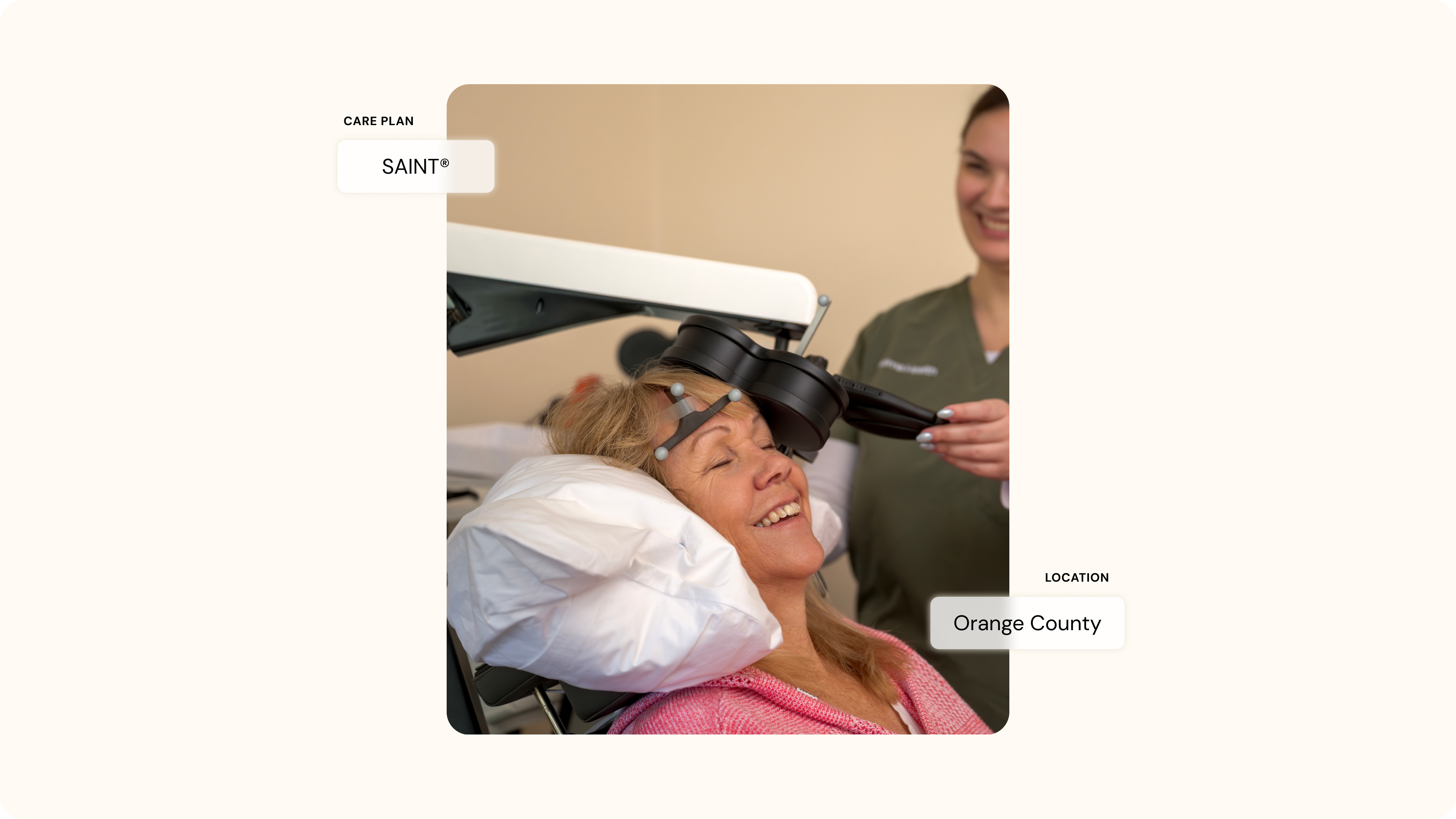
Most importantly, it means that patients only move to a lower level of care once their symptoms have abated and such a move is safe. Designed around this time course, SAINT condenses all TMS treatments into five days and optimizes stimulation location and amplitude to maximize the probability of a good clinical outcome.
Nolan and I both had the fortune of working with Mark George, M.D. at MUSC. Mark is Distinguished University Professor of psychiatry, radiology and neuroscience there and directs its Brain Stimulation Division. In 1993, he discovered that daily prefrontal magnetic stimulation delivered over several weeks could treat depression, a finding that led to the first FDA approval of TMS for psychiatric use and to the field many of us now work in. He told Nolan what any careful scientist would tell a trainee: change one variable at a time. Nolan did not listen. He wanted to move the field forward as fast as possible, so every parameter was changed simultaneously.
The pivotal study for SAINT appeared in the journal Brain in 2018. Six patients took part, all of them at the extreme end of treatment resistance. Every patient had already tried numerous medications, talk therapies, conventional transcranial magnetic stimulation, and even electroconvulsive therapy, but they all remained depressed for decades. They had already been in clinical trials for promising new treatments. This was the hardest possible group to start with, and these six patients became the first people to receive SAINT. Luckily for these patients and the thousands more since, Nolan was right. Depression scores fell by an average of 76%. Five of the six patients reached full remission by the standard Montgomery-Åsberg Depression Rating Scale (MADRS), and the brain signal the team had targeted shifted in the predicted direction - all within 5 days.2 In the years that have passed, we have been replicating these results across numerous clinical trials and doing the slower work of establishing how SAINT works so much faster and better than other treatments.3
SAINT broke from conventional treatments in several ways at once. First, the brain stimulation target was chosen individually. Instead of measuring from a landmark on the scalp, as conventional treatment does, the team used a form of MRI that shows which brain regions switch on and off together while a person lies still, and located the spot in the front of the brain where activity ran most strongly opposite to a deep region involved in mood and consciousness. Second, the dose per treatment session was tripled, with 1800 pulses of intermittent theta-burst stimulation being given each time the person received stimulation. Third, instead of a single treatment session per day over 6 weeks, 10 sessions of stimulation were given a day, 50 minutes apart across five straight days. Together, this results in roughly five times the total stimulation of a conventional course of treatment. Fourth, the intensity was adjusted using neuroimaging so the pulses are tuned to the depth of an individual patient’s cortex rather than an assumed average depth.
After the success of the first group of a half-dozen participants, we conducted an open-label trial that was published in the American Journal of Psychiatry in 2020. In 2022, the same journal published the double-blind randomized controlled trial of Stanford neuromodulation therapy, or SAINT, the design the field treats as definitive. Twenty-nine patients were randomly assigned to receive either real stimulation or an inactive imitation of it, and neither the patients nor the clinicians rating them knew which was which. Eleven of the 14 who received the real treatment, or 79%, were in remission across four weeks of follow-up, compared with only two of the 15 in the sham group.4
The trial never reached its finish. It was ended at the planned interim analysis because of the superiority of the active treatment with a large effect size, and it was stopped so that everyone enrolled could have the chance to receive SAINT. Continuing to tell patients that it was unknown if the active treatment was effective, as was the case at the start of the trial, was no longer defensible. The finding reached far beyond our field, from news coverage on NPR to NBC’s TODAY Show to the Huberman Lab podcast.
In 2021, Nolan and I founded Magnus, a company with a mission to bring the SAINT treatment to people who need it most. With the momentum of Magnus, the FDA granted Breakthrough Device Designation to the SAINT neuromodulation system for the treatment of major depressive disorder in adults who have failed to achieve satisfactory improvement from prior antidepressant medications in the current episode. In 2022, the FDA cleared the SAINT system as a bona fide treatment.
Every study since has strengthened the case. We reported on the durability of the benefit in Brain Stimulation in 2025. A randomized controlled trial published in World Psychiatry this year confirmed that the treatment works and paired that confirmation with a brain-wave study that begins to explain how it acts and points toward a way to predict who will respond. A separate study published this year followed patients treated in ordinary community clinics instead of research settings, including people with the additional medical and psychiatric conditions that trials usually screen out, which is to say the patients who actually walk through our doors. Nolan is an author on that paper. He did not live to see it published.
Evidence that the hypothesis was right
Some of the strongest evidence in the precision and mechanistic nature of SAINT is from its candidate biomarkers. Anish Mitra worked with Nolan and Marcus Raichle from Washington University on a landmark study of an MRI biomarker for SAINT treatment of depression. This work was published in2023, in the Proceedings of the National Academy of Sciences.
The study found that an MRI-derived measure met all criteria for a candidate biomarker. Namely, it is an objectively measured biological abnormality that distinguishes disease from health, scales with severity, predicts response, changes with active treatment, and whose normalization tracks clinical improvement and replicates independently. The team compared 33 patients with treatment-resistant depression against 101 healthy volunteers and found a consistent difference in the direction that signals travel between two regions. In healthy brains, one region reliably leads and the other follows. In roughly 80% of the depressed patients, the order was reversed. The reversal tracked with how severe the depression was, and after SAINT treatment the signal flow returned to the normal direction in step with patients getting better.
That result is worth emphasizing, because it is the difference between a treatment that works and a treatment that is understood.
It has given our field a measurable brain signature of depression that changes when the patient recovers, and it supported the idea that individualized scanning is the right way to aim treatment rather than an expensive refinement.
The veterans
Nolan’s two central tenets of treatment development were fast and effective. If there was a reliable signal that these two tenets could be met, he pursued it with all of his passion.
In 2018, Amber Capone approached Nolan after being turned away by physicians, researchers and military leaders. She and her husband Marcus, a retired Navy SEAL, had founded Veterans Exploring Treatment Solutions after Marcus recovered substantially following treatment with ibogaine, a compound derived from a West African shrub and illegal in the United States.
She had not been able to persuade anyone in academic medicine to study what she was seeing. Nolan, she said, was the first person who listened. What he did next is the part that should interest his colleagues. He did not campaign. He designed an observational study, meaning the treatment would happen whether or not anyone measured it, and he set out to measure it properly.
Researchers evaluated 30 special operations forces veterans before and after treatment at a clinic in Mexico. The evaluation, which took place at the Stanford Brain Stimulation Lab, included standardized clinical assessments administered by Nolan’s team of research experts instead of questionnaires the veterans filled out themselves, along with functional MRI scans and cognitive testing at each time point.
Twenty-three of the 30 people included in this study met criteria for PTSD, 15 for major depression and 14 for an anxiety disorder, and nearly half reported suicidal thinking when they enrolled. “These men were incredibly intelligent, high-performing individuals who experienced life-altering functional disability from TBI during their time in combat,” Nolan said
The protocol was called MISTIC, for magnesium-ibogaine: the Stanford traumatic injury to the central nervous system protocol. The magnesium was not incidental. Ibogaine can disturb the heart’s electrical rhythm in a way that, in certain vulnerable people, can be fatal, and magnesium was given alongside it specifically because it counteracts that effect. He designed around the known danger before he measured any benefit.
The published paper in Nature Medicine describes the fast and effective outcomes that Nolan always pursued in his work. One month after treatment, symptoms of PTSD were down an average of 88%, depression 87% and anxiety 81%, with no unexpected or serious side effects attributable to the treatment. “No other drug has ever been able to alleviate the functional and neuropsychiatric symptoms of traumatic brain injury,” he said. “The results are dramatic.”
He was equally direct about the limits, and he stated them before his critics could. The study was observational rather than randomized; there was no comparison group, the sample was small and made up of people who had already chosen to seek the treatment, and ibogaine’s legal status in the United States means the definitive trials have not yet been able to be run at all.
Nolan’s goal was never to win the argument in public. It was to run the randomized controlled trial, under regulated oversight and to the same standard we held SAINT to, that would answer the question properly. It is hard to overstate the uniqueness of this in a field where most try to capitalize on treatments at the expense of patients prior to the evidence supporting widespread use.
The MISTIC study has continued to yield findings. An imaging analysis of the same veterans, published in the journal iScience in March 2026, which the authors dedicated to him, reported increased cortical thickness, expansion of deeper brain structures and a reduction in algorithmically estimated brain age at the one-month mark, with the authors again noting that observational results require confirmation in randomized trials.
More recently, Nature’s Translational Psychiatry published a 12-month durability follow-up to the MISTIC cohort. Twenty-five completed the 12-month visit, and findings showed that improvements in disability, PTSD, depression and anxiety were sustained through 12 months. Of importance, this was not a control group; rather, it was a small sample with attrition, and most of the participants used other psychedelic substances or pursued additional interventions during the follow-up year, so the effects cannot be cleanly attributed to the single treatment. The work is observational, not a controlled trial, and its authors, Nolan among them, clearly state that regulated randomized controlled trials are the necessary next step.
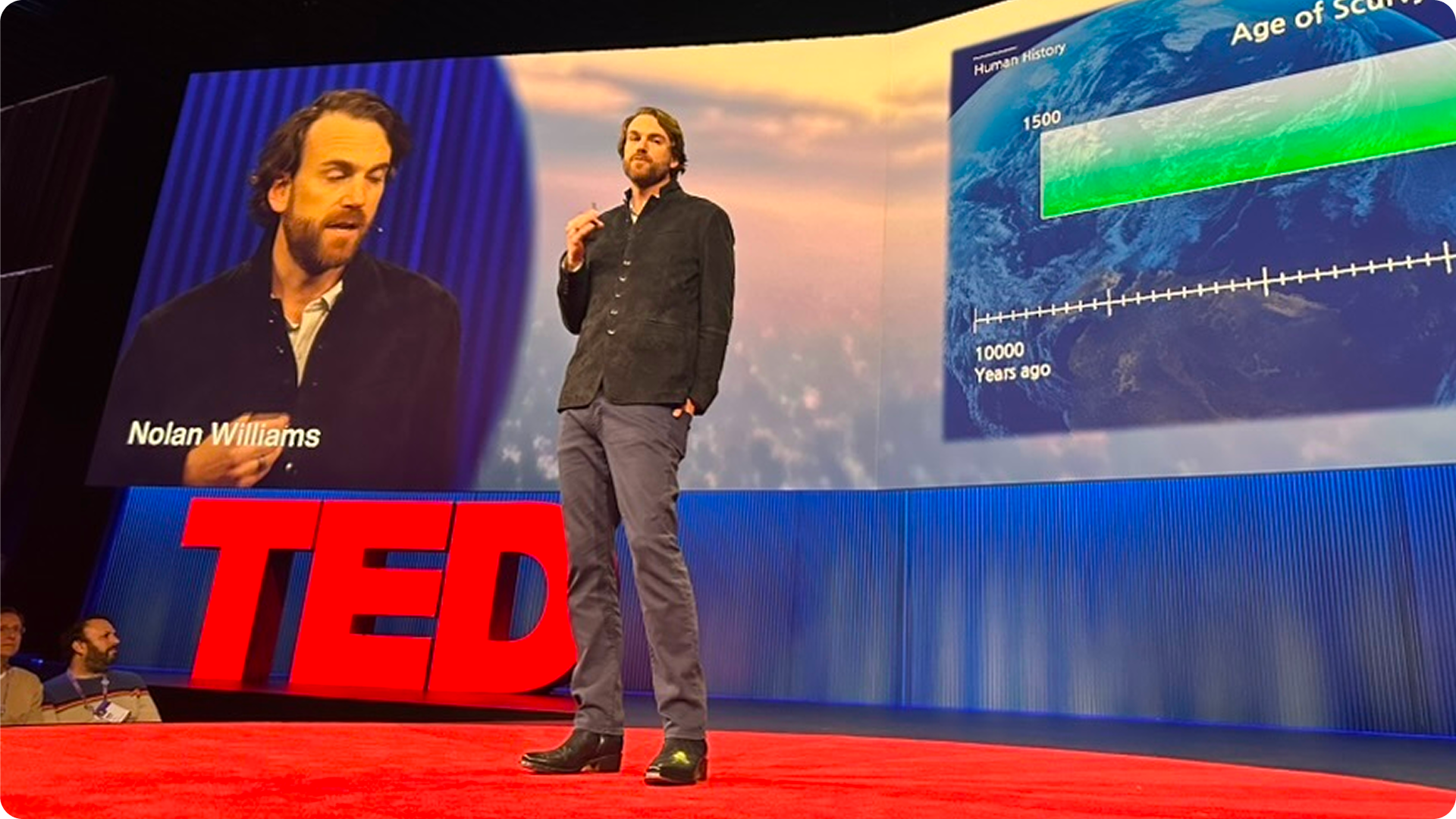
In April 2025, Nolan presented the case on the main stage of TED2025 in Vancouver, closing with a piece of medical history. A naval surgeon demonstrated in 1747 that citrus cured scurvy, and the profession went on ignoring the finding while sailors continued to die of a preventable condition. His argument focused on how slowly medicine accepts evidence that arrives from an unexpected direction, not whether the compound should be deregulated. And the distinction mattered to him.
What his death should mean to this profession
Nolan had an untreated psychiatric illness. He understood the brain circuits involved in severe mood disorders better than almost anyone alive. He built and validated a treatment with among the highest remission rates ever reported for treatment-resistant major depression. And, when he himself became gravely ill, he did not receive the treatment he helped create.
Dr. George, who knew about his illness and had urged him to get care, later wondered whether Nolan still carried some shame about the diagnosis. That is a hard thing to read, and it is worth saying out loud. Nolan spent his career proving that depression is a problem in the brain and not a failure of character. Physicians are not exempt from stigma, and a culture that makes asking for help feel costly is part of what we are treating.
It is worth being precise about what this does and does not mean, since he would have insisted on the distinction. It is not evidence against the treatments. The evidence for those is the body of work described above, and the manner of his death does not change it. What his death exposes is the distance between what our field can now deliver and what suffering people, including highly trained ones, allow themselves to accept. About 0.7% of Americans who could benefit from TMS actually receive it, decades after the treatment was first approved by the FDA, and the reasons for that are cultural, economic and structural rather than scientific.
What Salma Health inherits
Nolan, I, and the rest of our founding team developed Salma Health to bring peace to the chaos and suffering people with brain disorders experience every moment of their lives. Our model puts Nolan’s work into clinical practice. Diagnostics are an essential part of treatment selection, not optional. We deliver rapid-acting interventions within an integrated practice instead of referring patients elsewhere. Long-term support is treated as part of the treatment, not as follow-up, because a remission that is not maintained is only a partial result. Our Orange County clinic bears his name, and every SAINT treatment room across our centers is dedicated to his memory.
A great deal remains unknown. Which network targets and stimulation protocols work best for which people and symptoms? What is the best way to support people after remission? Nolan regarded that ignorance as the interesting part, and he would have regarded any tribute implying the work is finished as a misreading of the data and of him. Kristin so eloquently wrote about his work and how it ranged “from developing a fast-acting, game-changing treatment for depression, SAINT, to the study of ibogaine and its massive beneficial effects,” and she asked that his legacy be measured in the lives he touched.
That is the right measure, and it is also an obligation. It means running the clinical trials, closing the gap between what works and who receives it and making it ordinary for a physician in distress to be treated.
If your brain is telling you that you are beyond help, the evidence says otherwise. Ask early, and ask even when you are the expert in the room.
If you are having thoughts of suicide, call or text 988 to reach the 988 Suicide and Crisis Lifeline.
Cited sources:
1. Williams NR, Short EB, Hopkins T, Bentzley BS, et al. “Five-Year Follow-Up of Bilateral Epidural Prefrontal Cortical Stimulation for Treatment-Resistant Depression.” Brain Stimulation, 2016. Williams NR, Bentzley BS, Hopkins T, et al. “Optimization of epidural cortical stimulation for treatment-resistant depression.” Brain Stimulation, 2018.
2. Williams NR, Sudheimer KD, Bentzley BS, Pannu J, Stimpson KH, Duvio D, Cherian K, Hawkins J, Scherrer KH, Vyssoki B, DeSouza D, Raj KS, Keller J, Schatzberg AF. “High-dose spaced theta-burst TMS as a rapid-acting antidepressant in highly refractory depression.” Brain, 2018;141(3):e18. Mean reduction in the 17-item Hamilton Depression Rating Scale was 76%, from 28.8 to 7.0.
3. Batail JV, Feyder MT, Bentzley BS, Williams NR. “An Avenue for Optimization of Theta Burst Stimulation Protocols? Comments on the FOUR-D Randomized Noninferiority Clinical Trial.” American Journal of Psychiatry, 2024.
4. Cole EJ, Stimpson KH, Bentzley BS, et al., Williams NR. “Stanford Accelerated Intelligent Neuromodulation Therapy for Treatment-Resistant Depression.” American Journal of Psychiatry, 2020. Cole EJ, Phillips AL, Bentzley BS, et al., Williams NR. “Stanford Neuromodulation Therapy for Treatment-Resistant Depression: A Double-Blind Randomized Controlled Trial.” American Journal of Psychiatry, 2022;179(2):132-141, published online Oct. 29, 2021.
Why Salma Health?
With locations in La Jolla, Laguna Hills, and the Bay Area, Salma Health offers advanced mental and behavioral health care in California, with both in-person and virtual options. We support individuals living with depression, anxiety, PTSD, OCD, brain injuries, and related conditions, using personalized, science-backed approaches.
Start Your Journey Today
Getting started doesn’t have to be overwhelming. You can begin with a 15-minute Care Options Call, connect with our care team, complete a comprehensive intake, or schedule online. We meet you where you are and build care around your needs. Schedule your first appointment today and experience a higher standard of brain care—grounded in science, clarity, and continuity.
.png)


The professional services made available through Salma Health, Inc. are provided by licensed clinicians affiliated with independently owned and operated professional practices, including Center for Neurohealth, Inc., dba Salma Health, Ocean Psychiatry, Inc, and Salma Health LLC. Salma Health, Inc. provides administrative, technology and other related services to the professional practices it supports and does not itself provide any medical, mental health or other healthcare provider services. The content on this website has been reviewed by Center for Neurohealth, Inc., dba Salma Health, Ocean Psychiatry, Inc, and Salma Health LLC. The content on this website is for information purposes only and is not a substitute for professional medical advice, diagnosis or treatment.
