
Navigating Coverage for TMS, Spravato & Other Depression Treatments
- TMS is often covered by insurance, but most plans require documented diagnosis, prior treatment history and, in many cases, prior authorization.
- Spravato may be covered as well, but coverage usually depends on the diagnosis, a prior authorization review and treatment at a REMS-certified site.
- Coverage rules vary by plan. Blue Cross Blue Shield, Anthem, Cigna, Aetna, Medicare and TRICARE each publish their own criteria, and often what is covered under one plan may not apply to another.
- The biggest drivers of approval are usually the diagnosis, what treatments you have already tried, whether the provider is in network and whether the request is filed under the correct benefit.

Depression is common and often disabling. In 2021, an estimated 21.0 million U.S. adults experienced at least one major depressive episode, and 14.5 million had a major depressive episode with severe impairment.[1]1 For some people, standard treatment works well. For others, symptoms continue despite treatment medications and talk therapy. Treatment-resistant depression is commonly defined as depression that has not responded adequately to at least two antidepressant medications, and recent reviews estimate that it affects roughly 20% to 30% of people with major depressive disorder (MDD),[2] with recent research indicating the true rates could be much higher.[3]
This is where advanced treatment options like Transcranial Magnetic Stimulation (TMS) and Spravato are important to know about and discuss with your doctor. These treatments can be life-changing, but the coverage process is often more complicated than people are aware of. The encouraging news is that many health plans do cover them when the clinical criteria are met. The hard part is usually not whether coverage is possible, but rather understanding the rules, gathering the documentation, and navigating prior authorization without getting stuck.
Overview of Advanced Depression Treatments
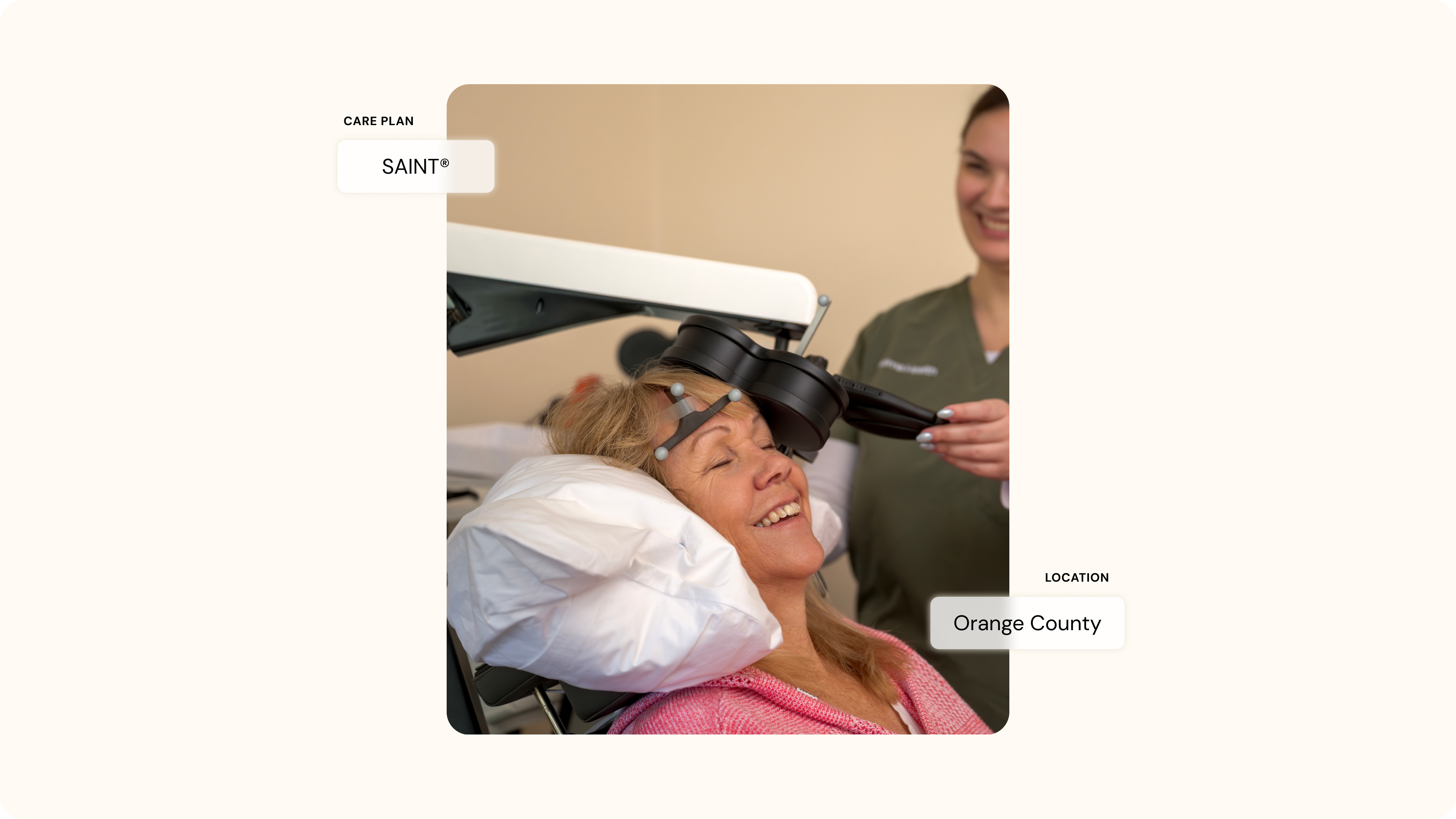
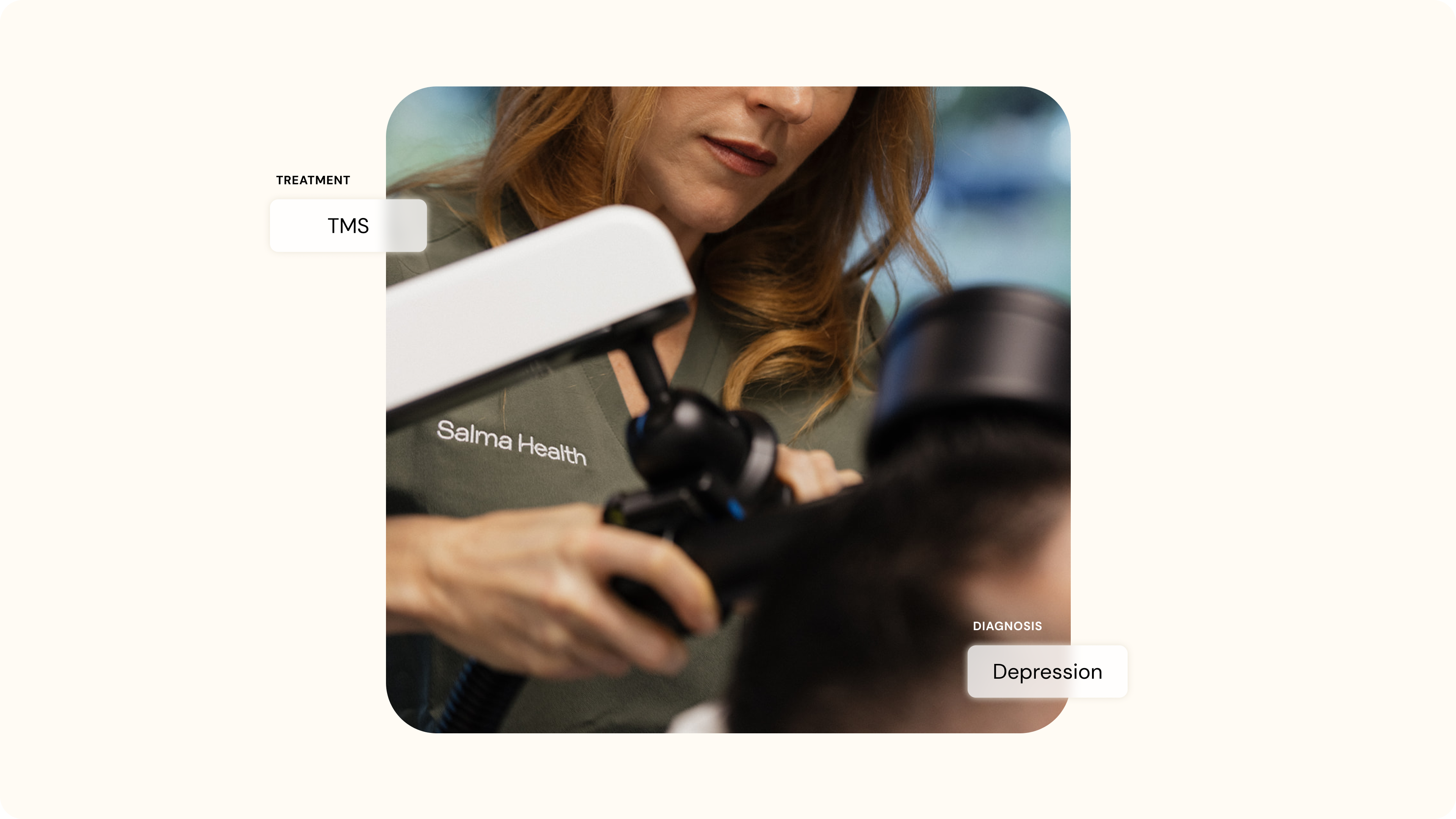
TMS is a noninvasive outpatient treatment that uses magnetic pulses to stimulate brain circuits involved in mood regulation. Medicare, TRICARE and multiple commercial insurers publish coverage criteria for TMS in major depressive disorder, which is one reason people usually ask, “is TMS covered by insurance?” The answer is often yes, but only after the plan confirms medical necessity.
Spravato is the brand name for esketamine nasal spray. It is FDA approved for adults with treatment-resistant depression and for depressive symptoms in adults with major depressive disorder with acute suicidal ideation or behavior. Because of risks such as sedation, dissociation and respiratory depression, it is available only through the SPRAVATO REMS program and patients must be monitored for at least two hours after administration.[4]
Other depression treatments may be covered differently. Psychotherapy, psychiatric visits and medication management are often handled through behavioral health or medical benefits. Standard TMS is generally easier to place within existing insurer rules than accelerated protocols such as SAINT. IV ketamine can be more difficult because insurers may cover FDA-approved Spravato while treating ketamine injection for depression as off-label or investigational.
Insurance Coverage Policies for TMS, Spravato and Other Depression Treatments
No matter which plan you have, coverage usually comes down to the same questions: What is the diagnosis? What has already been tried? Is the treatment FDA-approved or otherwise recognized by the plan? Is the provider in network? Does the request need prior authorization? And is the claim being billed under the right benefit? Those details matter because the same treatment can be covered one way under one plan and very differently under another.
TMS Therapy Coverage
Does Medicare cover TMS? In many areas, yes. Medicare Administrative Contractors publish local coverage determinations for TMS. One current CMS LCD states that outpatient rTMS may be covered for major depressive disorder when the patient has severe MDD, documented medication resistance or intolerance, an adequate psychotherapy trial and psychiatrist oversight.[5] Medicare covers SAINT therapy in hospitals and in the physician office in several geographies, including California.
Does Cigna cover TMS? Cigna’s current coverage policy says an initial outpatient regimen of TMS is considered medically necessary for major depressive disorder when criteria are met, including age, diagnosis, psychotherapy history and failed antidepressant trials. The same policy also says maintenance TMS is not medically necessary and lists accelerated protocols such as SAINT as experimental, investigational or unproven.[6]
Does Blue Cross Blue Shield cover TMS treatment? California Blue Shield and California Anthem Blue Cross both cover SAINT therapy. For other TMS treatments you have to look at the specific local plan. For example, Blue Shield of California’s published policy says TMS may be medically necessary for treatment-resistant major depressive disorder when defined criteria are met, while Anthem states that coverage decisions depend on the applicable benefit plan and state-specific policy framework.[7]
Does Aetna cover TMS? Aetna publishes TMS precertification materials and lists transcranial magnetic stimulation on its behavioral health precertification list, which is a strong sign that patients and providers should expect a utilization review step before treatment begins.[8]
Does TRICARE cover TMS therapy? TRICARE says yes: its public coverage page states that transcranial magnetic stimulation is covered on an outpatient basis for adults with major depressive disorder.[9]
Spravato (Esketamine) Coverage
Is Spravato covered by insurance? Often yes, but it usually requires more logistics than a standard prescription. Because Spravato is administered in a certified setting and includes post-dose monitoring, plans may apply both drug criteria and site-of-care requirements. Patients also need to know whether their plan handles it under the medical benefit, pharmacy benefit or both.
Does Cigna cover Spravato? Cigna’s current drug coverage policy requires prior authorization for Spravato and includes documentation-based criteria for treatment-resistant depression.[10]
Does Anthem cover Spravato? Anthem publishes clinical criteria for Spravato and, in the version publicly available through its provider resources, approval for treatment-resistant depression depends on adult age, moderate-to-severe major depressive disorder, inadequate response to two antidepressant therapies and concurrent antidepressant treatment.[11]
Does Aetna cover Spravato? Aetna has a dedicated Spravato medication precertification request form, which means patients should expect the treating clinician to submit clinical details before the plan confirms coverage.[12]
What about Optum or UnitedHealthcare? UnitedHealthcare’s commercial medical benefit policy says Spravato is proven and medically necessary for treatment-resistant depression when criteria are met, including failure to improve after at least two antidepressants, REMS-certified administration and FDA-labeled dosing.[13]
Does Medicare cover Spravato? Medicare Part B covers a limited number of outpatient drugs under certain conditions, generally including drugs you would not usually give yourself in a doctor’s office or hospital outpatient setting. CMS also publishes billing guidance for esketamine when it is administered at healthcare sites enrolled in the FDA REMS program. In practice, Original Medicare patients should confirm both the drug benefit and the visit-related costs with the treating center and their Medicare contractor or secondary plan.[14]
Other Depression Treatments Worth Asking About
If you are exploring other advanced options, ask two separate questions: “Is the treatment itself covered?” and “Are the related visits, monitoring and evaluations covered?” That distinction matters. For example, standard TMS may be covered even when an accelerated SAINT-style protocol is handled more cautiously. Coverage for SAINT therapy is rapidly expanding and currently covers 80 million lives in the U.S.
Some plans that cover Spravato may still treat IV ketamine for depression as unproven or off-label.
This is also where a strong clinical workup matters. A thorough comprehensive intake can make the record clearer, especially when a plan wants to see prior treatment history, symptom severity, co-occurring conditions and why a more advanced option is medically appropriate.
Navigating the Insurance Process
- Start with your diagnosis and treatment history. Before you call your insurer, gather the basics: your formal diagnosis, the medications you have tried, how long you took them, what side effects you had and whether you completed psychotherapy. Plans often ask for exactly this information.
- Ask the right coverage question. Instead of only asking “is TMS covered by insurance” or “is esketamine covered by insurance,” ask whether the treatment is covered under your medical benefit, pharmacy benefit or behavioral health benefit. For Spravato, ask whether the medication and the observation visit are covered the same way.
- Confirm network status early. Ask whether the treatment center, the psychiatrist and the facility are all in network. A covered treatment can still become expensive if one part of the care is out of network.
- Ask whether prior authorization is required. If the answer is yes, ask what documentation is needed, who submits it, and how long the review usually takes. For TMS and Spravato, prior authorization is common.
- Verify the clinical criteria. Ask your insurer whether they require failed medication trials, a psychotherapy trial, a severity scale, psychiatrist oversight or a REMS-certified treatment site. Then ask your treating team to match the submission to those criteria.
- Get your cost estimate in writing. Ask about your deductible, copay, coinsurance, out-of-pocket maximum and any separate charges for mapping, observation, office visits or facility fees.
- Document every call. Write down the date, the representative’s name, the reference number and what you were told. If there is a later denial, your notes can help.
What to do if Denied
A denial is frustrating, but it is not always the end of the road. First, ask for the reason for the denial in writing. Common reasons include missing documentation, an incomplete medication history, an out-of-network site, a coding problem, or a mismatch between the request and the plan’s policy language.
Next, ask your treating clinician whether the denial should be answered with a corrected submission, a peer-to-peer review or a formal appeal. In many cases, the strongest appeal includes medication records, psychotherapy history, symptom scores, safety concerns, functional impairment and a clear explanation of why the requested treatment is medically necessary now.
At Salma Health, our team can help patients understand what may be needed after a denial, including whether additional records, benefit clarification, or a corrected authorization request may help move the process forward. While every insurance plan is different, we work with patients to make the next step clearer, whether that means revisiting documentation, discussing appeal options, or considering another covered treatment path.
If you still don’t get approval, ask about internal and external appeal rights, single-case agreements, payment plans, or whether a different covered option could bridge care while the appeal continues. Patients seeking care through military coverage should also ask about referrals and pre-authorization rules specific to their TRICARE plan.
How Salma Health Can Help You
It is our core belief that people should spend less time untangling paperwork and more time getting the right care they need when they need it.
Salma Health works with most major insurance providers and can help you verify your benefits before your first appointment. Our team can review your coverage, help you understand possible out-of-pocket costs and walk you through your options step by step.
We understand that coverage for advanced depression treatments can be confusing. TMS therapy, Spravato, medication management, comprehensive intake and other services may be handled differently depending on your plan, diagnosis, network status and whether prior authorization is required. Salma Health helps patients clarify those details early, so insurance questions are part of the care conversation from the beginning.
Our team can also help gather the information often needed for review, including treatment history, prior medication trials, diagnosis, symptom severity and the clinical rationale for the recommended care plan. If you are considering TMS therapy, Spravato therapy, SAINT therapy or something else, we help connect the clinical side of care with the insurance steps needed to move forward.
For Veterans, military families and patients using TRICARE, we can also help clarify eligibility, referral needs and next steps so the process feels less fragmented.
Cited sources:
[1] https://www.nimh.nih.gov/health/statistics/major-depression
[2] https://pubmed.ncbi.nlm.nih.gov/41303496/
[3] https://bmjopen.bmj.com/content/13/7/e063095
[4] https://www.accessdata.fda.gov/drugsatfda_docs/label/2025/211243s019lbl.pdf
[5] https://www.cms.gov/medicare-coverage-database/view/lcd.aspx?LCDId=34641
[8] https://www.aetna.com/document-library/healthcare-professionals/assets/documents/bh_precert_list.pdf
[9] https://tricare.mil/CoveredServices/IsItCovered/TranscranialMagneticStimulation
[11] https://files.providernews.anthem.com/3661/CC-0086_Pub-12-18-2023.pdf
[12] https://www.aetna.com/document-library/healthcare-professionals/assets/documents/bh_precert_list.pdf
[14] https://www.medicare.gov/coverage/prescription-drugs-outpatient
Why Salma Health?
With locations in La Jolla, Laguna Hills, and the Bay Area, Salma Health offers advanced mental and behavioral health care in California, with both in-person and virtual options. We support individuals living with depression, anxiety, PTSD, OCD, brain injuries, and related conditions, using personalized, science-backed approaches.
Start Your Journey Today
Getting started doesn’t have to be overwhelming. You can begin with a 15-minute Care Options Call, connect with our care team, complete a comprehensive intake, or schedule online. We meet you where you are and build care around your needs. Schedule your first appointment today and experience a higher standard of brain care—grounded in science, clarity, and continuity.
.png)


The professional services made available through Salma Health, Inc. are provided by licensed clinicians affiliated with independently owned and operated professional practices, including Center for Neurohealth, Inc., dba Salma Health, Ocean Psychiatry, Inc, and Salma Health LLC. Salma Health, Inc. provides administrative, technology and other related services to the professional practices it supports and does not itself provide any medical, mental health or other healthcare provider services. The content on this website has been reviewed by Center for Neurohealth, Inc., dba Salma Health, Ocean Psychiatry, Inc, and Salma Health LLC. The content on this website is for information purposes only and is not a substitute for professional medical advice, diagnosis or treatment.
