
Interventional Psychiatry Treatments Proven to Work
- For people whose depression has not improved with standard medication or therapy, interventional psychiatry offers evidence-based options that can reduce the need for prolonged trial-and-error.
- Interventional psychiatry treatments directly target the brain circuits involved in mood and emotional regulation, leading to more personalized, precise and in some cases faster-acting treatment options.
- TMS, SAINT® and Spravato® have expanded interventional psychiatry beyond ECT, giving patients access to outpatient treatments that may avoid hospitalization, anesthesia and cognitive side effects associated with older treatments.
- A clinician-led assessment at Salma Health can help determine which treatment best matches a person’s symptoms, treatment history, safety considerations, insurance and personal goals.
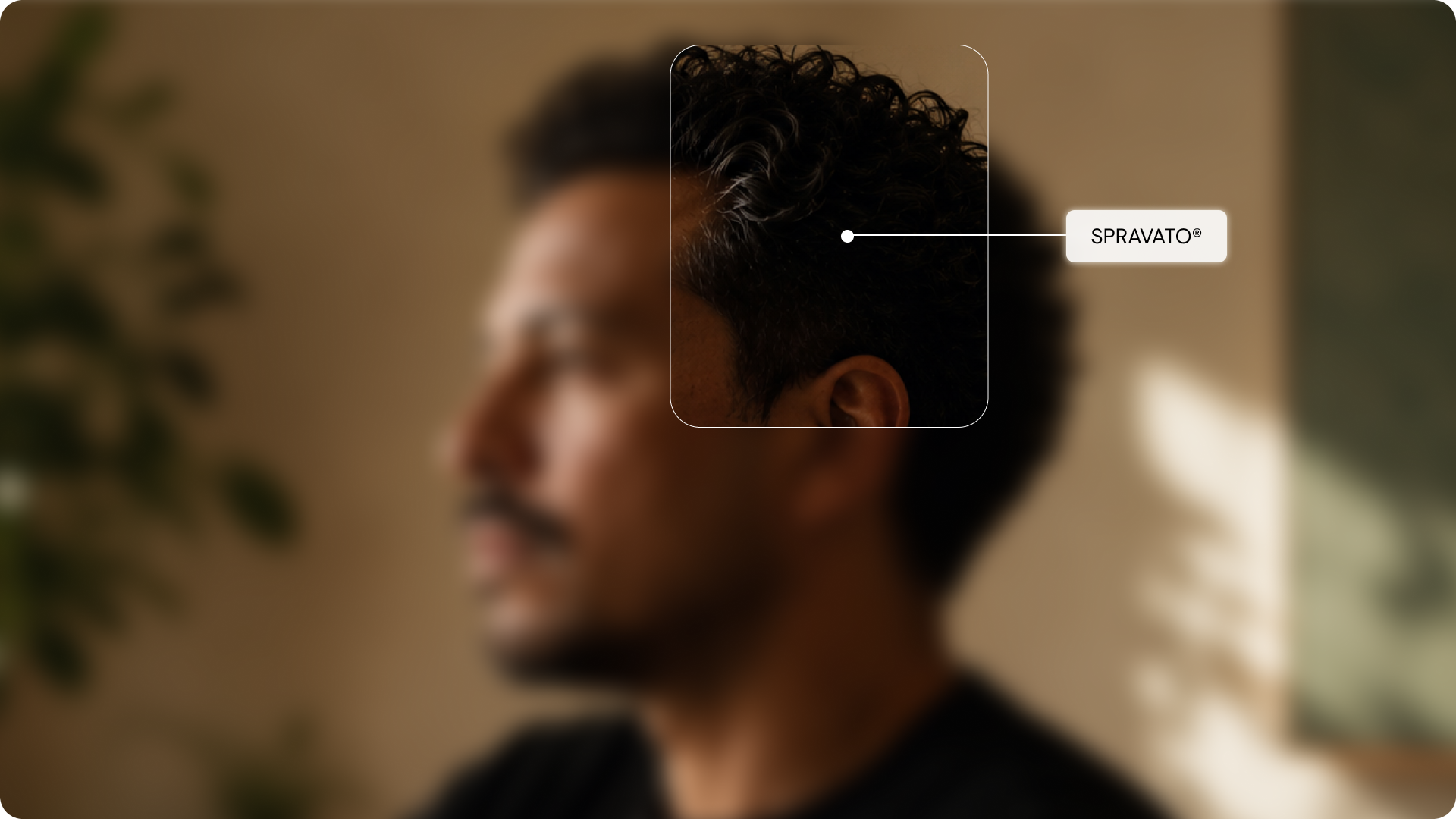
For the estimated 21 million American adults living with depression, the journey toward recovery begins with hope. Yet for far too many, optimism gives way to frustration and despair during a prolonged search for effective treatment — a trial-and-error process often involving multiple medications, dose adjustments and changes in care providers. Fewer than half of the people who take multiple different antidepressants end up in remission.[1] For people with treatment-resistant depression, those who cannot tolerate medications and those who need more rapidly acting treatment for severe symptoms, the growing field of interventional psychiatry is opening new pathways to recovery, offering effective alternatives with the potential for faster relief for patients unable to benefit from traditional therapies.
What Is Interventional Psychiatry?
Interventional psychiatrists are physicians with specialized training in advanced, procedure-based techniques that apply neuromodulation and rapid-acting agents for people with conditions such as depression, post-traumatic stress syndrome (PTSD) and anxiety disorders. Unlike conventional antidepressant medications, which circulate throughout the body, interventional psychiatry treatments directly target dysfunctional brain circuits involved in mood, cognition and emotional regulation. While antidepressants might take several weeks to show meaningful improvement, certain interventional treatments can begin working within days.[2]
“The growth of interventional psychiatry has made evidence-based, highly effective and noninvasive options available to people who don’t benefit from standard treatment, can’t tolerate medications, or for individuals who need more immediate results,” says Mohammed Ahmed, M.D., neuropsychiatrist and clinical director of Salma Health.
“This reflects a larger shift toward personalized, tailored approaches to treatment as we capitalize on advances in neuroscience to address brain health in a more targeted way.”
Dr. Ahmed points out that for many years, the mainstay of interventional psychiatry was electroconvulsive therapy (ECT), a technique in which patients, under general anesthesia, receive controlled electrical currents to the brain to induce a brief seizure. By altering the neural connections and neurotransmitter systems involved in mood regulation, ECT remains a very effective treatment for severe and treatment-resistant depression.[3] But it requires hospitalization and is associated with side effects such as confusion and short-term memory loss. ECT also continues to carry a stigma based on outdated misconceptions.
For this reason, ECT was historically viewed as a “last resort” treatment, reserved for the most severe cases. Now, with the introduction of effective, less-invasive outpatient procedures, interventional psychiatry treatments are no longer viewed as a last resort, but rather as invaluable new evidence-based tools that bring greater precision to brain healthcare — expanding the range of options for one of the most prevalent and debilitating brain-health conditions.
Interventional Psychiatry Treatment Options and Efficacy
Interventional psychiatry has expanded well beyond ECT, with several evidence-based, FDA-cleared and approved treatments now offered by Salma Health, along with others that are yielding promising results in clinical trials. While no single treatment is right for every patient and success is never assured, these newer options are highly effective for many, providing new pathways to recovery for individuals who haven’t achieved adequate symptom relief through traditional approaches — without the stigma associated with ECT.
Interventional Psychiatry Treatments at a Glance
Transcranial Magnetic Stimulation (TMS) Therapy
A major turning point in this new era of procedure-based brain-health therapies came with the advent of transcranial magnetic stimulation, or TMS therapy, which received FDA clearance in 2008 and is now the most established and widely used interventional psychiatry treatment.[4]
“With TMS, suddenly there was no need for hospitalization, no inducing of seizures and no cognitive side effects,” Dr. Ahmed notes. “You just drive to the clinic, get the treatment, and go home. That began to change the public perception of interventional psychiatry.”
Traditional TMS is a noninvasive, well-tolerated treatment in which a magnetic coil is positioned against the patient’s scalp, then used to deliver brief pulses to specific brain regions to activate neural pathways associated with depression. Sessions are typically administered five days a week for approximately six weeks with a three-week taper, for a total of nine weeks. Each TMS session lasts 3-20 minutes. Patients remain awake during the treatment, with no anesthesia or sedation required. People are able to return to their daily activities immediately after the session.
Salma Health offers TMS at its clinics using both MagVenture and MagStim devices, both of which are FDA-cleared for major depressive disorder and obsessive-compulsive disorder (OCD). In extensive studies for treatment-resistant depression and OCD, TMS has shown meaningful response and remission rates in many patients who didn’t improve with antidepressant medications alone.[5][6]
SAINT (Stanford Accelerated Intelligent Neuromodulation Therapy)
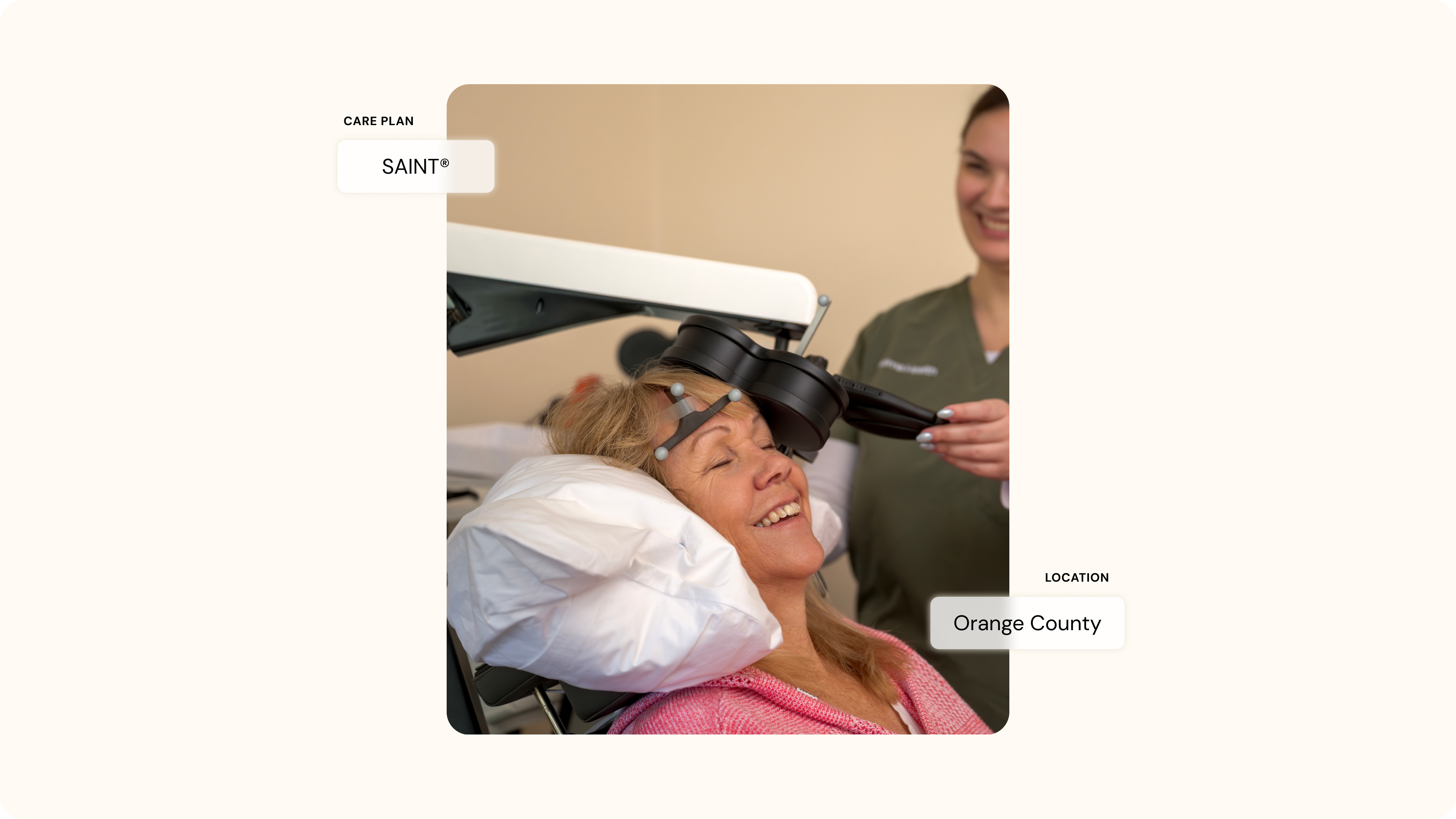
If TMS was a major turning point in the perception and accessibility of interventional psychiatry treatments, the recent introduction of a specialized, accelerated form of TMS called SAINT (Stanford Accelerated Intelligent Neuromodulation Therapy) is a game-changer in how fast, effective, and safe a treatment for depression can be. Unlike conventional TMS, SAINT uses advanced MRI imaging to target the patient’s unique depression circuitry and delivers treatment in a much more compressed time frame: Rather than once a day for six-nine weeks, patients receive 10 treatments per day for five days using the FDA-cleared SAINT neuromodulation system. This has proven to be highly effective, with remission rates similar or better than ECT but with no negative cognitive side effects.[7]
“Logistically, TMS can be challenging for many individuals, but with SAINT, the patient can take five days off to get the complete treatment and then be finished,” Dr. Ahmed explains.
Salma Health is one of a small number of clinics in California offering this groundbreaking interventional therapy, which received FDA clearance for patients with treatment-resistant major depressive disorder in 2022. Developed by doctors at Stanford University, SAINT employs both structural and functional MRI scans to map the patient’s brain shape and activity, then targets a key neurocircuit involved depression with high-dose, theta-burst magnetic stimulation to normalize brain activity and restore healthier mood regulation.
“SAINT neuromodulation therapy has paved the way for a reimagining of brain healthcare,” says Dr. Brandon Bentzley, co-founder and CMO at Salma Health. “For patients with severe depression and suicidal ideation, we can provide immediate stabilization, analogous to a heart-attack patient getting angioplasty. And beyond that, using imaging to map the brain before delivering this targeted treatment is leading to significant advances in our understanding of the neural correlates of specific brain functions and the networks involved in depression and other brain disorders.”
Spravato (Esketamine)
In March 2019, the FDA approved Spravato (esketamine) nasal spray in conjunction with an oral antidepressant for treatment-resistant depression. January 2025, the FDA approved Spravato (esketamine) as a standalone treatment for adults with major depressive disorder who don’t adequately improve after at least two standard treatments. Unlike traditional antidepressant medications, which typically target neurotransmitters such as serotonin and norepinephrine, Spravato acts, in part, by blocking certain N-methyl-D-aspartate (NMDA) receptor activity in the brain.[8] By rapidly normalizing neural activity and associated with mood regulation, Spravato can relieve symptoms much faster than traditional antidepressants.[9]
Spravato can cause temporary sedation, dissociation, and increased blood pressure, so it’s important that it be administered under medical supervision. Salma offers Spravato in-clinic across its California locations. As part of Salma’s certification through the FDA’s Risk Evaluation and Mitigation Strategy (REMS) program, we closely monitor every Spravato patient — tracking their blood pressure and any side effects during their time at the clinic, providing regular follow-up care, and working with family members to make sure they are driven home and remain comfortable during their recovery. Because Spravato is a controlled substance with the potential for addiction, these steps are important to help ensure that the medication is not misused and for patients to experience the best possible outcomes.
Is Interventional Psychiatry Right for You?
For individuals whose depression persists despite appropriate treatment with medication management, psychotherapy, or both, interventional psychiatry introduces new possibilities through science-based approaches that target the specific brain circuits involved in mood disorders. These include options such as TMS and SAINT that are noninvasive, with minimal side effects. Both SAINT and Spravato also offer the promise of improving symptoms much more rapidly than traditional antidepressant drugs. TMS, SAINT, and Spravato are supported by extensive clinical research and have produced high remission rates, along with strong safety profiles. These treatments can also be a good fit for people who cannot tolerate antidepressants because of medical issues, general intolerance or co-occuring psychiatric conditions, as well as for those with severe symptoms or suicidal ideation who need a more rapidly acting treatment.
Insurance coverage is always an important factor when considering these therapies. Some treatments are covered once specific medical criteria are met, while others may involve out-of-pocket costs. Salma’s care coordination team is available to review benefits, explain coverage requirements and discuss options for helping patients gain access to care.
Whether it’s traditional treatment or an interventional approach, Salma Health is committed to delivering the right evidence-based treatment to the right patient at the right time, every time. If you believe interventional psychiatry may be worth exploring, we encourage you to schedule a comprehensive intake at a Salma clinic, where a structured, clinician-led evaluation can help determine whether these approaches align with your symptoms, treatment history and goals.
Cited sources:
[1] https://pubmed.ncbi.nlm.nih.gov/37491091/
[2] https://pmc.ncbi.nlm.nih.gov/articles/PMC9851754/
[3] https://pubmed.ncbi.nlm.nih.gov/28658461/
[4] https://www.sciencedirect.com/science/article/pii/S1388245724003766?via%3Dihub
[5] https://pubmed.ncbi.nlm.nih.gov/37501135/
[6]https://www.mdpi.com/2077-0383/13/18/5358
[7] https://pubmed.ncbi.nlm.nih.gov/32252538/
[8] https://psychiatryonline.org/doi/10.1176/appi.ajp.2019.19020172
[9] https://pubmed.ncbi.nlm.nih.gov/23982301/
Why Salma Health?
With locations in La Jolla, Laguna Hills, and the Bay Area, Salma Health offers advanced mental and behavioral health care in California, with both in-person and virtual options. We support individuals living with depression, anxiety, PTSD, OCD, brain injuries, and related conditions, using personalized, science-backed approaches.
Start Your Journey Today
Getting started doesn’t have to be overwhelming. You can begin with a 15-minute Care Options Call, connect with our care team, complete a comprehensive intake, or schedule online. We meet you where you are and build care around your needs. Schedule your first appointment today and experience a higher standard of brain care—grounded in science, clarity, and continuity.




The professional services made available through Salma Health, Inc. are provided by licensed clinicians affiliated with independently owned and operated professional practices, including Center for Neurohealth, Inc., dba Salma Health, Ocean Psychiatry, Inc, and Salma Health LLC. Salma Health, Inc. provides administrative, technology and other related services to the professional practices it supports and does not itself provide any medical, mental health or other healthcare provider services. The content on this website has been reviewed by Center for Neurohealth, Inc., dba Salma Health, Ocean Psychiatry, Inc, and Salma Health LLC. The content on this website is for information purposes only and is not a substitute for professional medical advice, diagnosis or treatment.
